
Finding and landing competitors’ backlinks is essential to your website’s SEO success.
While building high-quality backlinks can help your website rank higher in your search niche, piggybacking on the research and outreach your competitors have already done is the key to uncovering missed link-building opportunities and avoiding wasted time on tactics that don’t work.
Backlinks are essentially votes of confidence from another domain. They signal to search engines that your content is authoritative and trustworthy, increasing the likelihood it will appear in relevant search results.
However, if you’ve hit a dead end in your own link-building strategy, it could be time to conduct a competitor backlink analysis to discover any high-value referring domains, content gaps, or outreach opportunities you may have overlooked.
With this in mind, let’s take a deep dive into how to find backlinks of competitors, evaluate them and use them to your advantage in your own link-building campaign.
What Are Competitors’ Backlinks?
Competitors’ backlinks are links that direct traffic from a website to your competitor’s domain.
If these links come from high-quality domains, they are a valuable source of ‘link juice’ for your competitor, signalling to a search engine that their site is a valuable resource.
While this is beneficial for your competitor’s search engine visibility, missing out on the same link opportunities could damage your own ranking position.
Taking time to conduct an analysis of your competitor’s backlinks puts you in a better position to identify potential link-building opportunities while letting your competitor do all of the heavy lifting.
The key here is to be prepared to spot any broken links or gaps where you could add more value as a resource, to increase your chances of landing a placement.
Who Are Your Backlink Competitors?
When selecting competitors for a backlink audit, there are two directions you can go in:
Domain-Level Competitors Backlinks
Your most common backlink competitors are the domain-level websites competing for the same search ranking position as you in your search niche.
These competitors usually target the same organic traffic, sell similar products/services and rank for the same keywords, making them ideal targets to piggyback from when hunting for backlink opportunities.
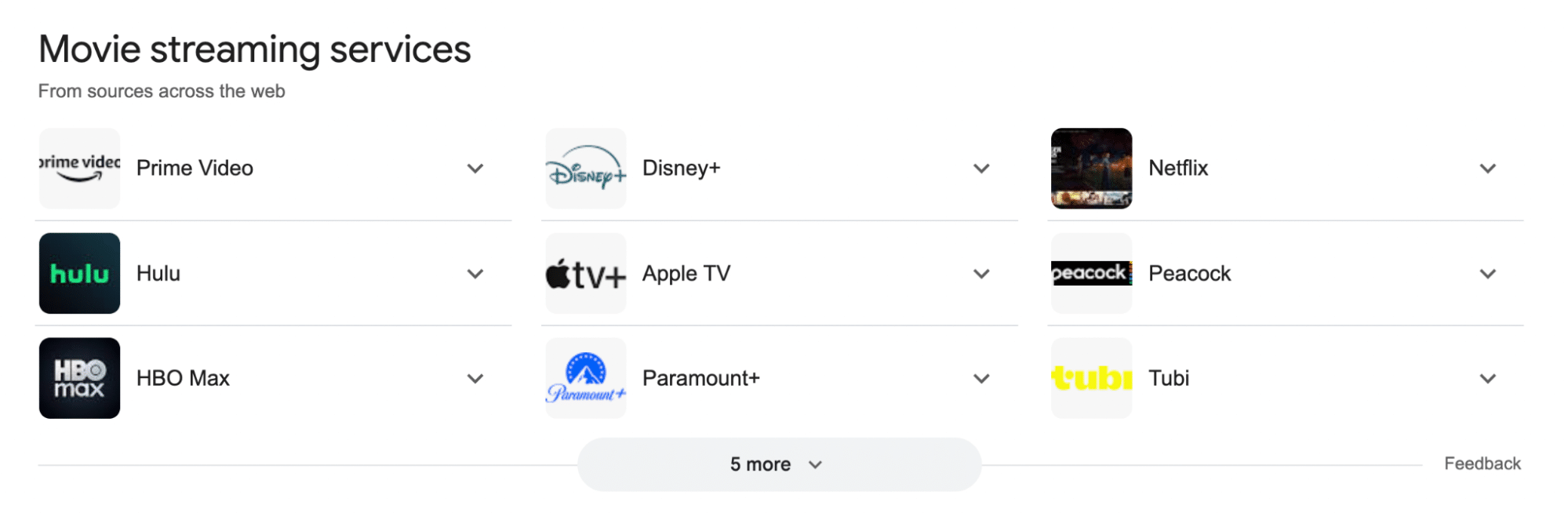
Take Disney+, for example. Its closest domain-level competitors are Prime Video, Netflix, and Hulu, all streaming services that offer similar experiences for a single target demographic.
To learn more about your domain health and your ranking postion for any keywords, it’s important to conduct your own website SEO audit first, to see where your website places in it’s search niche.
Page-Level Competitors Backlinks
Your other key competitors are the pages that compete with your website for the same target keyword or phrase.
While they may not directly compete with your brand or target a matching audience, they are still in direct competition with the keywords you’re aiming to rank for.
For example, when we search for the term ‘best streaming services’, Disney+ competes with webpages on TV review sites such as Rotten Tomatoes, rather than its direct competitors, Prime Video and Apple, which offer the same services.
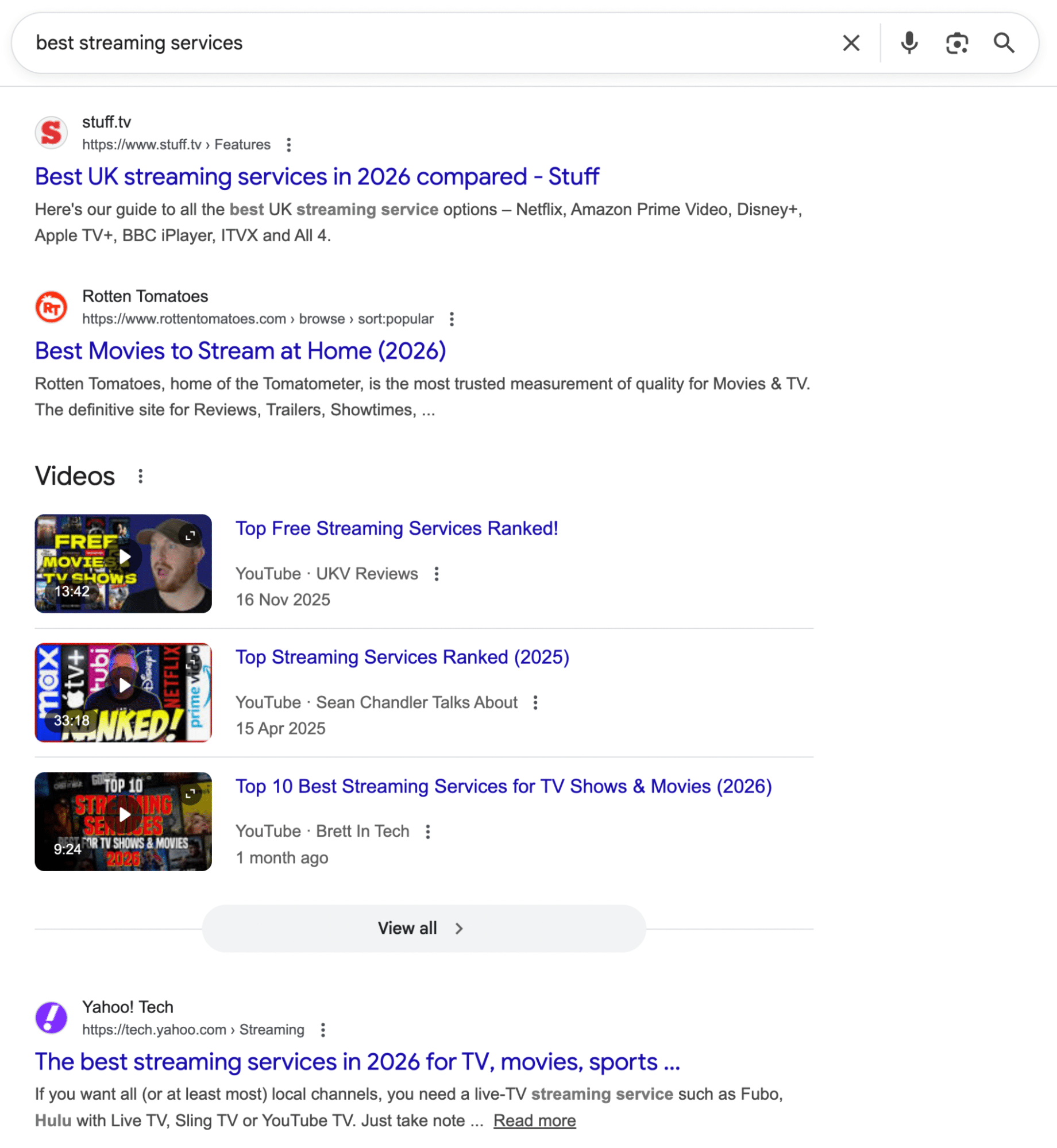
This can make it more difficult to piggyback on competitors’ backlinks, as a page-level competitor may not target the same websites or search niche as you do.
How to Find Backlinks of Competitors
Now that we’ve covered who your competitors are, let’s learn how to find backlinks of competitors, analyse them and use them in just a few steps.
Hunting for competitors’ backlinks is easy with the right tools. Before we start, ensure that you have access to a backlink monitoring tool like Ahrefs or SEMrush for the best results.
Build Your Competitor List
Before you perform a backlink audit of your competitors’ backlinks, you first need to establish who you’re competing against online.
From domain-level competitors to page-level competitors, the best way to start your hunt is by defining your search niche.
The key is to get specific about your business and the audience it serves. Here are just a few factors to consider before you select your competitors:
- What are your unique selling points?
- Who is your target audience?
- Where is your geographic focus?
Each of these elements impacts your search goals and makes it easier for you to spot your matching SEO competitors.
Once you’ve defined your niche, it’s time to make a list of the keywords and search terms you wish to rank for.
Using a tool like Ahrefs, start by inputting a parent topic, such as ‘Streaming Service’ and take a look at the other relevant keywords with the best search potential.
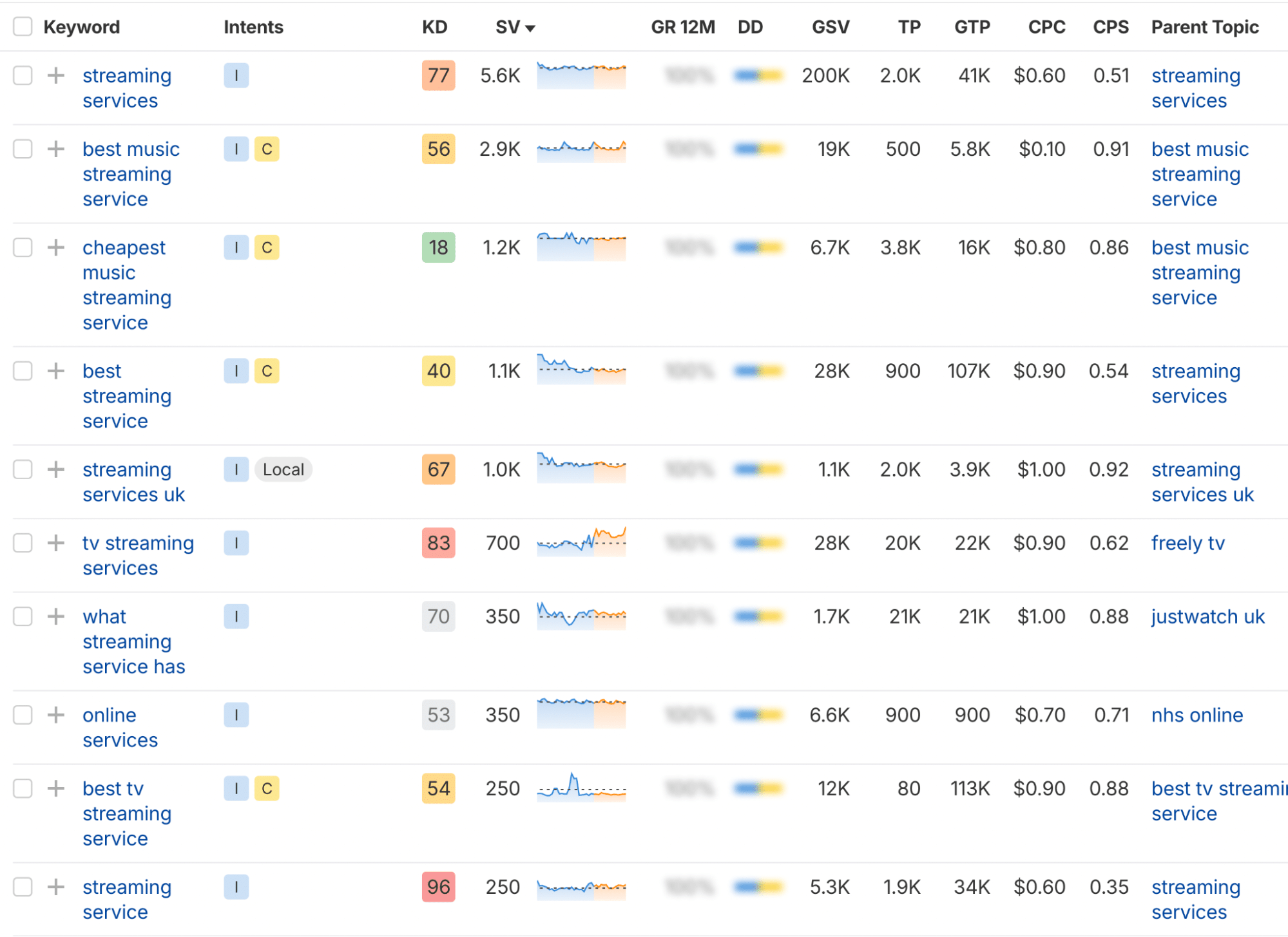
Keyword research can take some time, but it’s well worth the effort, as this will be your foundation for your competitor backlink analysis moving forward.
Once you’ve discovered a list of target keywords, you’re ready to search for your top competitors.
In this case, we’ve selected the keyword ‘streaming services UK’ to see what directly competes with our example brand, Disney+, in a local search.
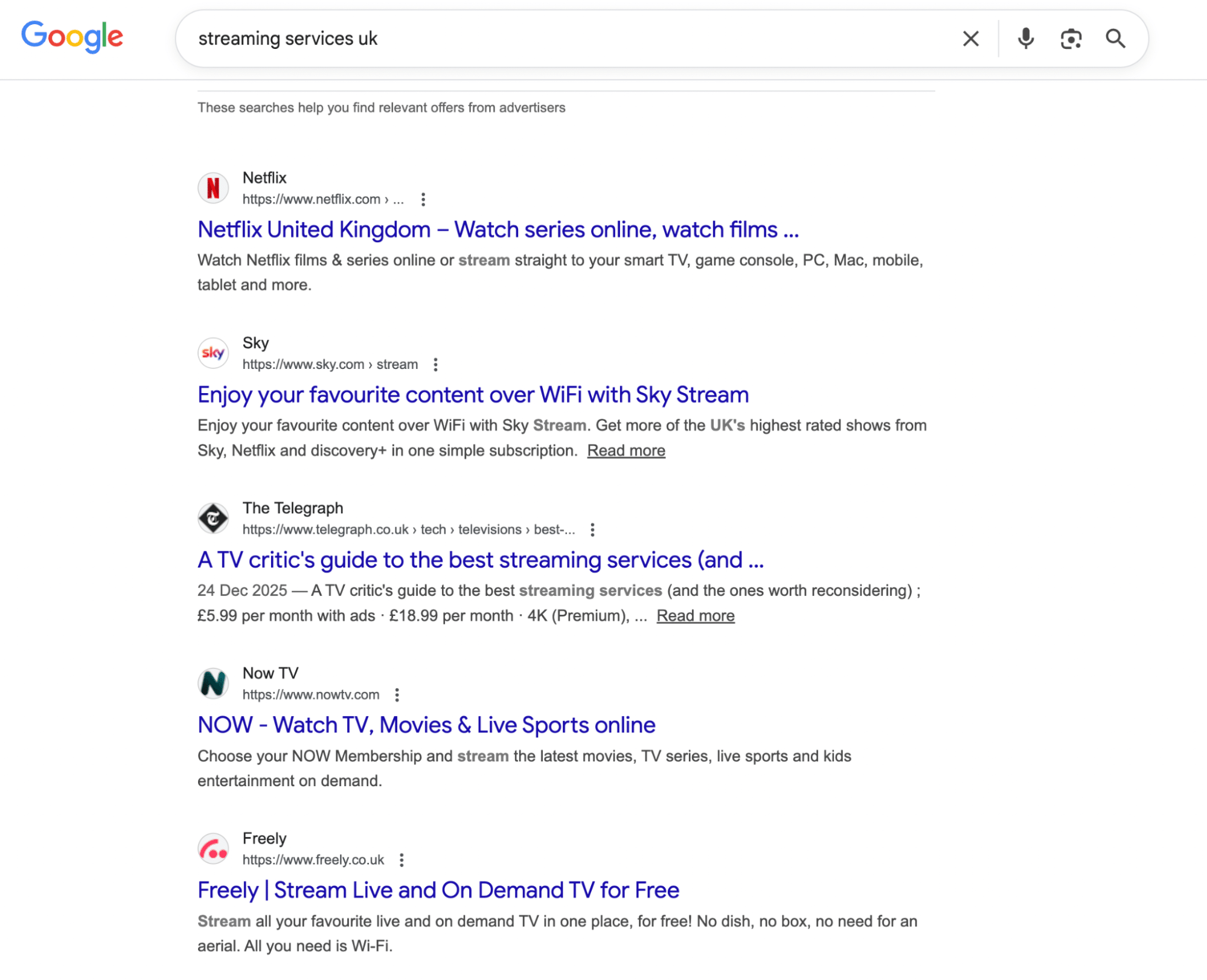
After inputting our keyword into the search, we can see that our top competitors here are Netflix, Sky and NowTV, three domain-level targets that we can perform a backlink analysis on.
Perform a Backlink Audit
Once you’ve identified your search competitors, it’s time to learn how to conduct a backlink audit.
For this, you’ll need a backlink checker to streamline this process. Tools like Ahrefs, SEMrush or Moz are great for this, however, any tool that offers a ‘backlinks report’ function will work.
To take this one step further, invest in a tool that offers link intersect/gap analysis functions, such as Ahrefs. This allows you to enter your domain alongside 3-5 competitors and immediately search for websites that link out to them but not you.
For this purpose, we’ve used Ahrefs to give you a closer idea of what an in-depth competitor backlink analysis could look like.
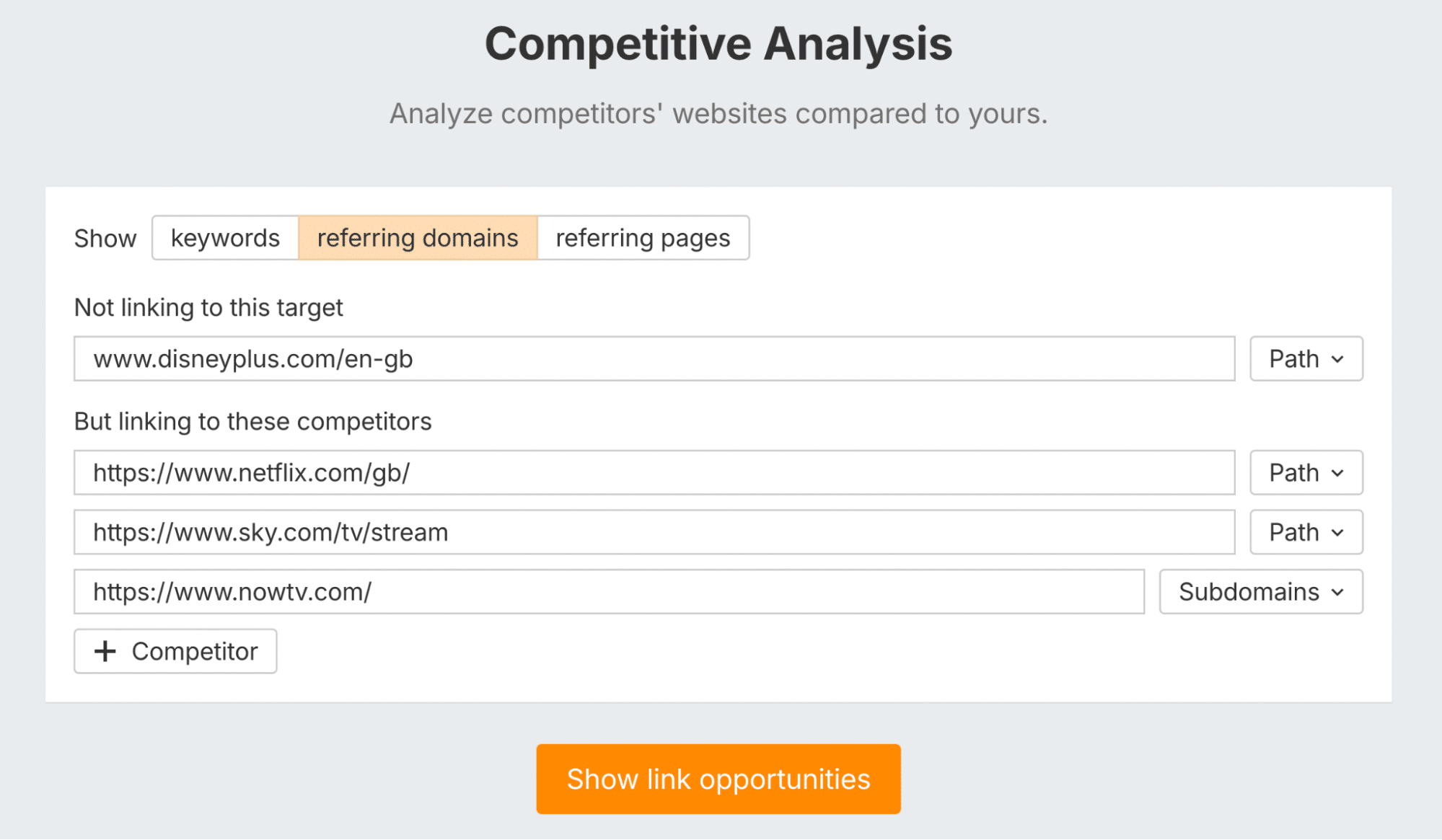
To begin, we’ve input our example brand, Disney+, into Ahrefs’ Link Intersect tool, alongside the other top competitors that appeared in the search for our target keyword, ‘streaming services UK’.
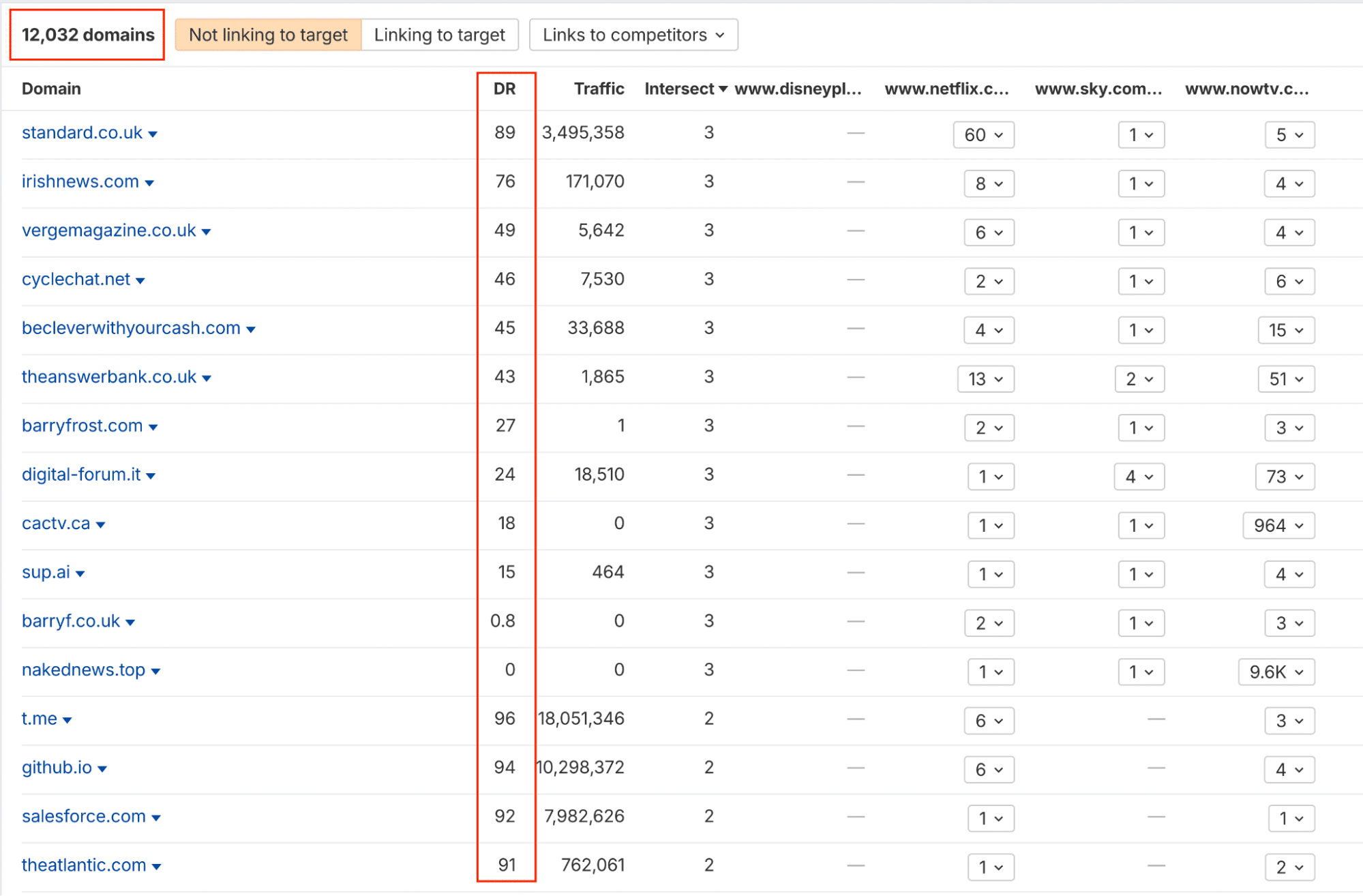
These are our results. According to Ahrefs, there are over 12,000 do-follow competitors’ backlinks not linking to our target page on Disney+.
However, not all of these competitors’ backlinks are useful to us. As you can see above, DR levels of 0, for example, will not be prime candidates for link outreach.
To narrow down the search, play around with your tool’s Domain Rating and Domain Traffic filters to find the most profitable results that are likely to pass on positive link juice to your website.
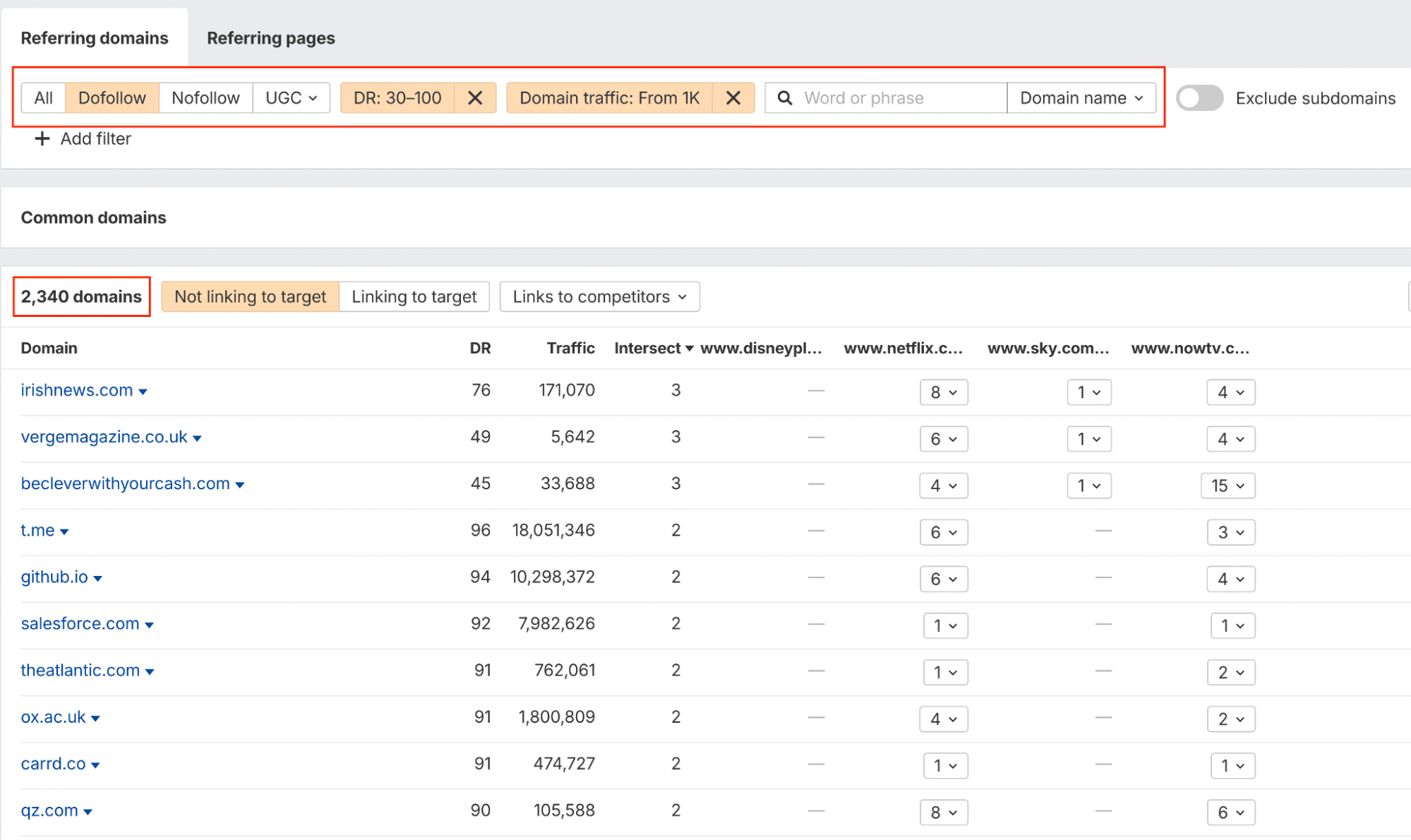
In this case, we’ve gone for DR 30+ sites with at least 1K monthly traffic. As you can see, it’s brought down our competitors’ backlinks list to 2,000.
Another tip to remember is to enable the ‘one link per domain” filter, to avoid sifting through lists of duplicate domains.
Evaluate Your Competitor’s Backlinks
Once you’ve discovered a solid set of competitors’ backlinks from websites that you’d like to potentially reach out to, it’s time to start evaluating your list by quality, placement and relevance.
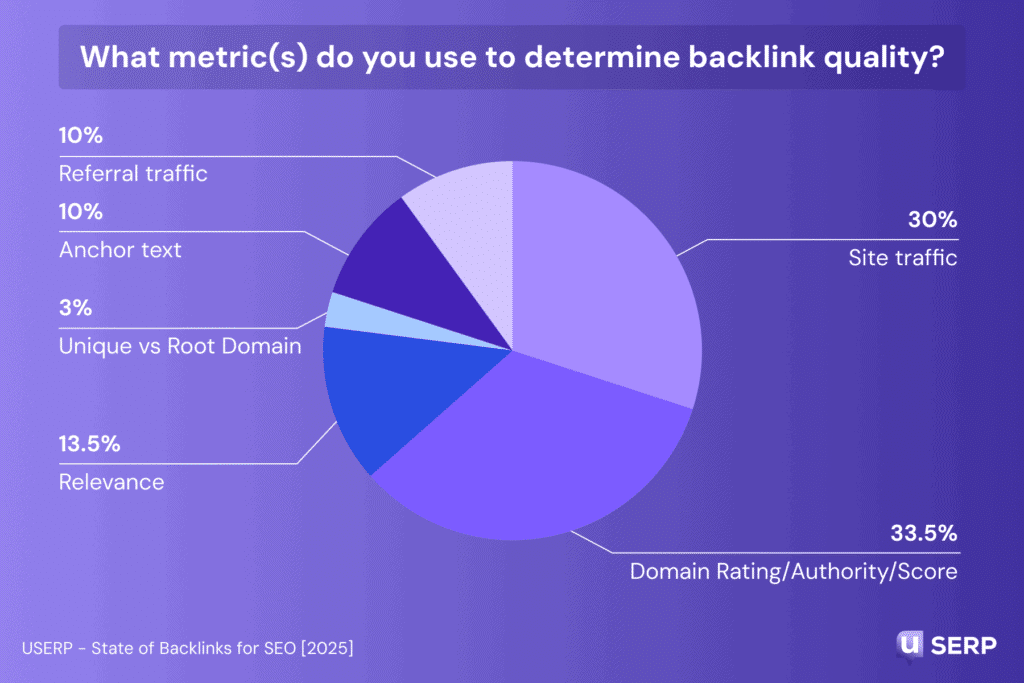
(Image Source: USERP)
According to a study by USERP, 63.5% of SEO marketers agree that backlinks with high domain authority and site traffic are the most vital components of a powerful backlink profile and are crucial to consider when choosing the best competitors’ backlinks to engage with.
Backlink Analysis Phase 1: Quality
To conduct a thorough competitor backlink analysis, start by first determining the link’s domain authority score and working out if it will add value to your SEO profile.
The higher the DA/DR, the more ‘link juice’ it will pass on to your website.
Site traffic is also a crucial factor to consider here. While domain authority may appear high, a site with little to no traffic could be perceived as inactive by a search engine, making it less likely to show up in a relevant search. Worst still, with no organic traffic, your link won’t receive any clicks, which is also a key conversion driver for your domain.
Backlink Analysis Phase 2: Relevance
How closely matched is this target website to your search niche? Is this website targeting the same demographic?
The relevance of your competitor’s backlink is determined by how well it matches your own brand, products and services. The closer the match, the more organic your link placement will appear to the search engine.
If your target link and anchor naturally align with the topic of the page you’re aiming to place it on, the more likely a site editor will be to feature it as a do-follow placement.
Backlink Analysis Phase 3: Placement
When evaluating competitors’ backlinks, make sure to check where the placements appear on your target website.
For example, if the link is placed in a sidebar or navigational menu, it has less value in the eyes of a search engine. However, if the competitor link is added organically within a relevant blog post as a helpful resource, this will power some serious link juice.
See how far up a link is placed within a piece of content. If a website is happy to mention your competitor at the beginning of an article, the link is much more likely to be engaged with by their readers.
If you aim to place a link on the same page, remember where your competitor appears, and aim to place a backlink above them for the most success.
Use Referring Pages to Find Content Gaps
Don’t stop at domain analysis, also use your backlink checker tool to analyse referring pages too.
In Ahrefs, for example, follow the same steps using the Link Intersect tool, but this time, select referring pages, rather than referring domains.
This is crucial if you want to gain more insight into the types of content linking out to your competitors and identify any potential content gaps where you could insert your link alongside.
The best chances for link insertion come from listicle-style content where numerous competitors are mentioned at once. This is the easiest way to submit your brand for a feature, especially if it naturally aligns with the topic of the article.
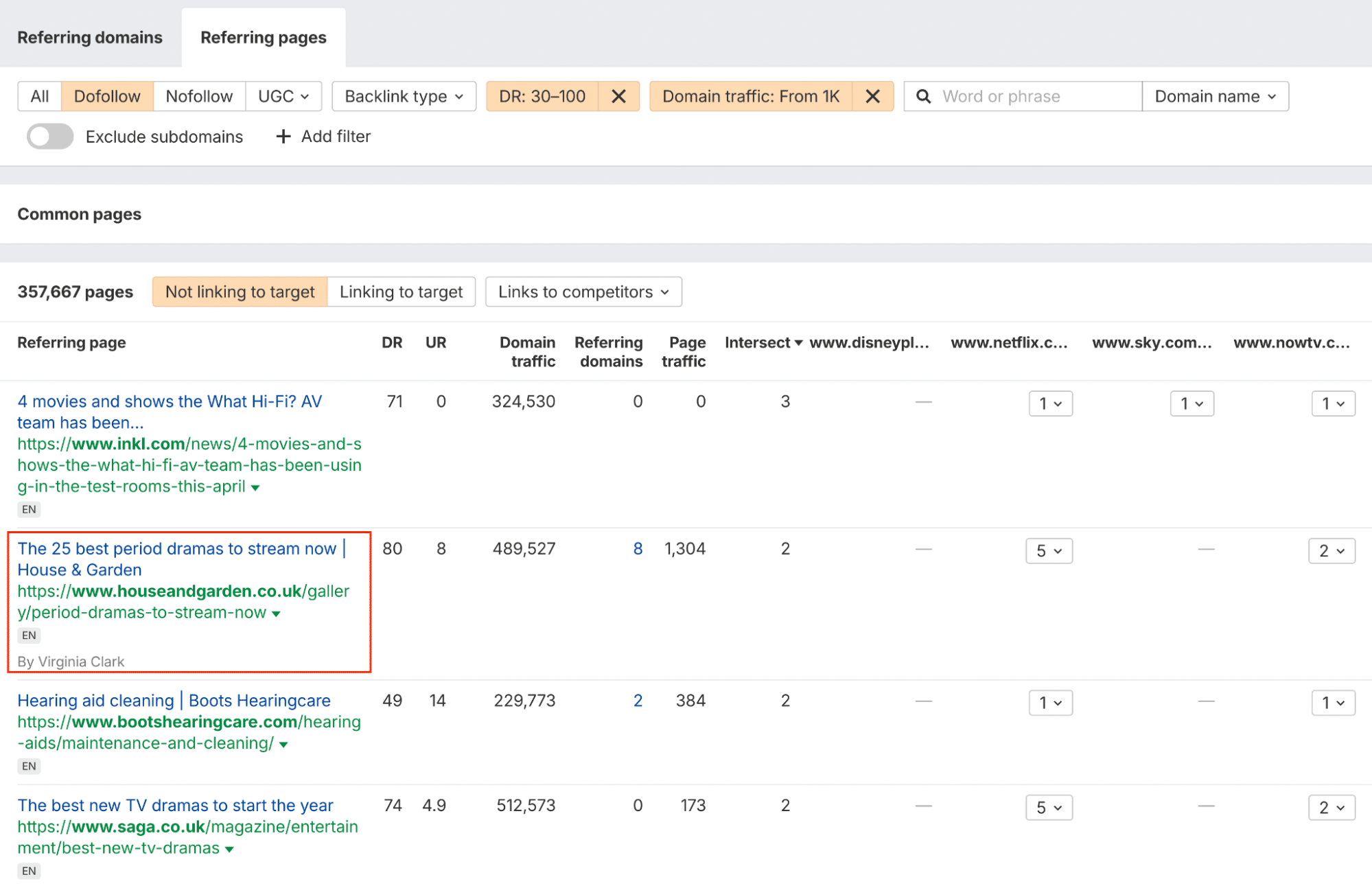
Here we’ve selected this article from House & Garden Magazine, on ‘The 25 Best Period Dramas to Stream Now’.
This referring page naturally links to many Disney+ competitors organically, providing them with a good chance of being featured if they reach out with one of their own dramas that organically aligns with the article’s theme.
Identify Any Broken Links
Another thing to check before you move on to landing your competitor’s backlinks is any broken links pointing to their domain.
Broken link building is a sneaky strategy that consists of building new links in replacement of a broken competitor placement.
Here, you have an opportunity to get in contact with a target website’s editor and replace their link with yours, before they even know it has a 404 error.
The process is simple. Just input your competitor’s competing page into Ahrefs and select the ‘Broken Backlinks’ finder.
For the purpose of this, we’ve used one of Disney+’s top competitors, NowTV, to show you how it works.
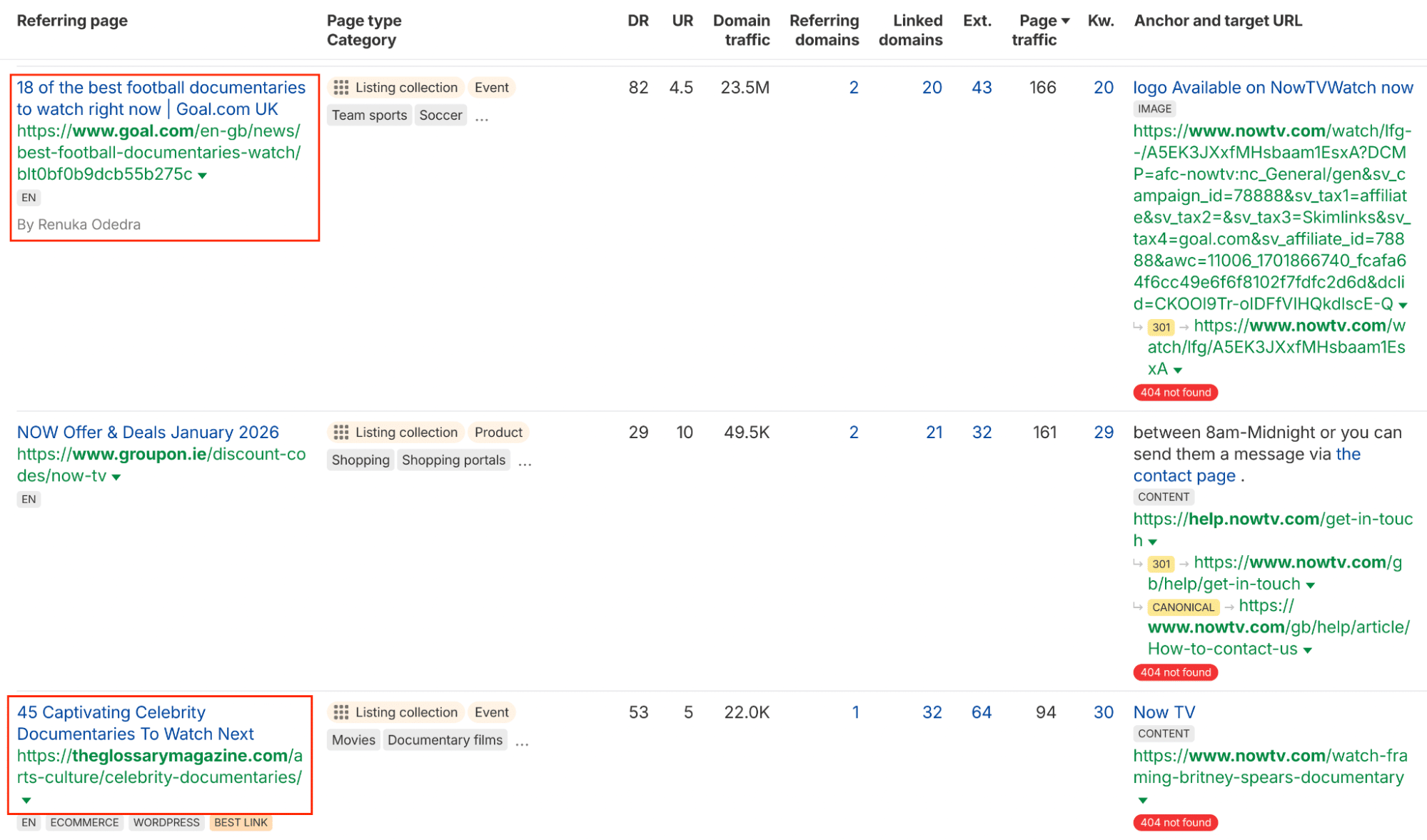
As you can see here, NowTV has a number of broken backlinks with 404 and 301 errors. In articles like the ones we’ve highlighted, Disney+ has the perfect opportunity to approach websites like Goal.com and TheGloassaryMagazine.com and offer a linkable asset to replace the broken link.
For example, in the article titled 45 Captivating Celebrity Documentaries To Watch Next, Disney+ could submit a niche edit on a number of potential options from its streaming platform.
Check Homepage Mentions
Homepage and service links are among the hardest to place for most businesses. This is why it is extra important to monitor your competitor’s homepage backlinks to help understand why a site has chosen your competitor over you.
To track competitor homepage mentions, consult your backlink audit and run a direct search on your target’s do-follow homepage placements.
Once you’ve identified the domains pointing to your competitor’s homepage, take a look at how the homepage link appears on the site.
Is the anchor text organic? How does the surrounding link-text sound? Has your competitor been mentioned in a listicle?
Depending on your findings, you can modify your own content or create a new guest post that follows a similar strategy.
This could increase the likelihood of placing a homepage link on a target website.
Start Landing Those Gaps
Now that we’eve covered how to find backlinks of competitors, let’s put those competitors’ backlinks into action.
In 2026, 54% of brands generate links through competitor analysis, proving that understanding competitors’ backlinks drives real results.
Whether you opt for broken link building or invest in a guest post service, here are some of the best ways to replicate competitors’ backlinks.
Identify The Best Outreach Opportunities
Landing backlinks starts with powerful outreach. However, before you reach out to publications and websites where competitors have landed placements, it’s crucial to consider how your content fits on a specific domain.
First, check if your target website is likely to respond positively to a link-insertion request.
Signs that your target domain is ‘link-friendly’ include frequent publishing of guest posts from your competitors, specific contact pages for guest posting opportunities and most importantly, organic publication of competitor links.
The best websites publish competitor content and links naturally, meaning the links they insert add value to their readers, and the content submitted is on-topic and contributes to the website’s own industry authority.
Target relevance is the key to getting featured. Only outreach to target websites that match your search niche, to ensure that your link lands naturally and is recognised by the search engine as a helpful source.
Personalise Your Outreach Approach
When approaching your target website, you must first identify the right prospect to contact.
Avoid the classic “info@…” emails. These are likely to be overused and widely ignored by your target, leaving your email buried among hundreds of others while your target publishes your competitor’s backlinks.
Instead, find a specific blog author, editor, or SEO content manager responsible for publishing blog content and any link insertions. These contacts should be your first port of call.
To find a specific email address, there are plenty of tools you can use for manual outreach. From LinkedIn to Hunter, to Apollo, it’s never been easier to secure the right contact information.
For the purpose of this purpose, let’s use Apollo to find a contact at House & Garden Magazine, for example:
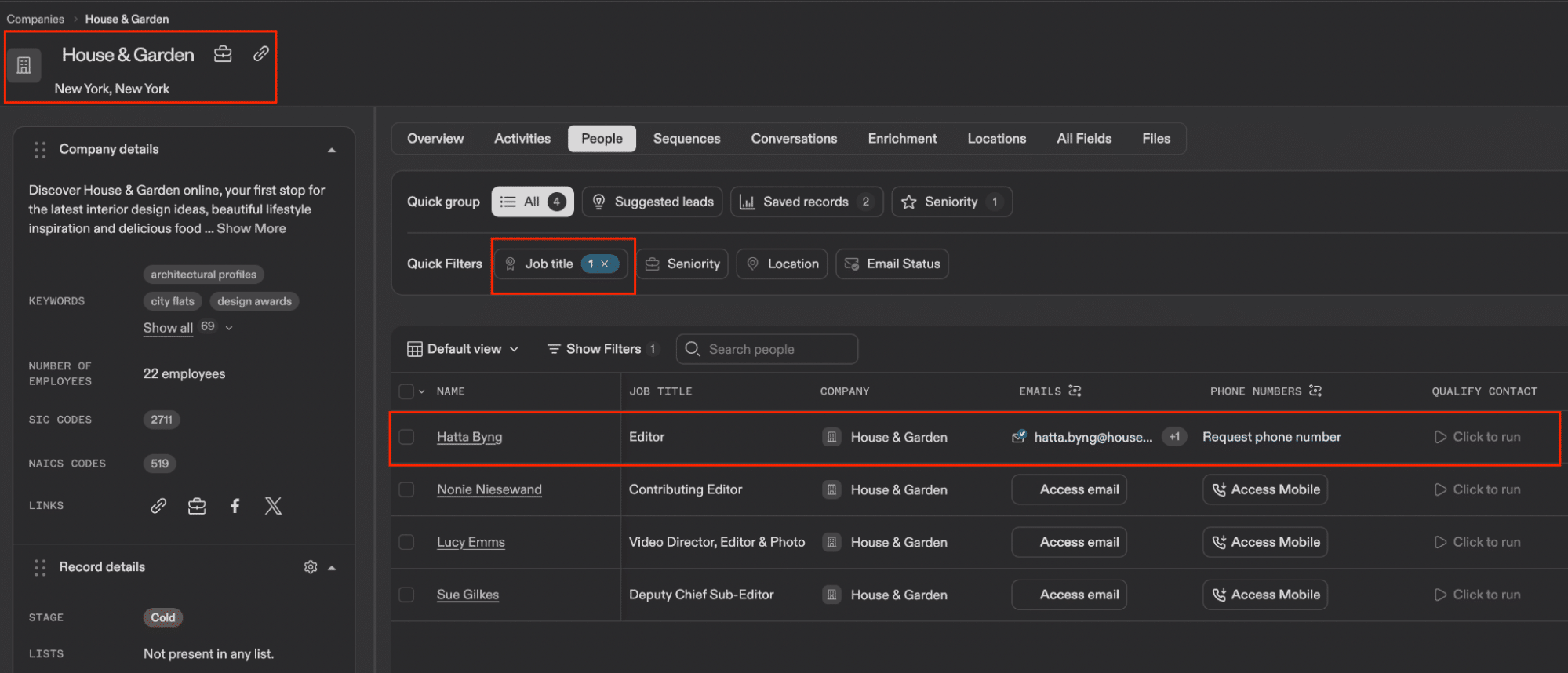
As you can see above, we’ve entered the website into Apollo’s contact finder, filtered by people, and then filtered by job position.
In this case, we’ve chosen the role of ‘editor’ and have identified the best-fit email for a guest post or link-based contribution.
Once you’ve secured the best-fit prospect, it’s time to rival any competitors’ backlinks with a personalised outreach approach.
Personalisation alone can improve response rates by more than 32%, especially if you focus your approach on mutual benefit.
Start with a compelling subject line and avoid generic phrases like ‘Link Exchange Request’ and ‘Guest Post Contribution’. Instead, focus on catching their attention with original stats, topic proposals and catchy content.
In the body of the email, prove that you’re not a bot. This is where it’s time to get personal. Mention something specific about their work and don’t forget to include personal details such as your prospect’s name and the name of the publication you’re pitching to.
Finally, don’t forget to add value. Explain why adding your link is mutually beneficial for both parties and is superior to your competitors’ backlinks. For example, “this data could reinforce your point in paragraph two”.
If you’re contributing a guest post, the same could apply to the content topic. If you’ve successfully found an organic gap, let your prospect know that the contribution could also benefit their topical authority and naturally align with their existing articles.
The key here is to get straight to the point, especially if you’re contacting a busy editor of a popular publication. Craft an outreach template that is catchy, focused, and full of value for the recipient.
Prioritise Building Genuine Relationships
Cold pitches will only get you so far in a competitive world of outreach. The best competitors’ backlinks come from those who prioritise building real, genuine relationships with target domains, for repeat exposure.
If you want to go beyond a one-time publish and build a powerful relationship with a site editor, focus on more than the link-building request alone.
Instead, start a conversation with your target prospect and aim to connect over shared interests and helpful insights, not just link requests.
The key here is to constantly add value to your communication. Offering a prospect return links in an ABC exchange, exclusive data for their blog, and powerful resources that can be used beyond the partnership is the best way to keep a contact sweet and a conversation going.
Once you’ve secured a placement, don’t abandon the chat. Remaining consistent and maintaining genuine contact could help you foster a long-term partnership that knocks your competitors out of the game.
Monitor Your Competitors’ Backlinks Over Time
Continuous monitoring is the key to staying on top of your competitors’ backlink profiles. We all know that SEO isn’t a one-and-done activity. In fact, tracking competitors’ backlinks regularly puts you in the best position to seize link-building opportunities and stay ahead of the competition.
Here are just a few ways to track your competitor’s backlinks effectively using some of the best backlink monitoring tools on the market:
Ahrefs Alerts
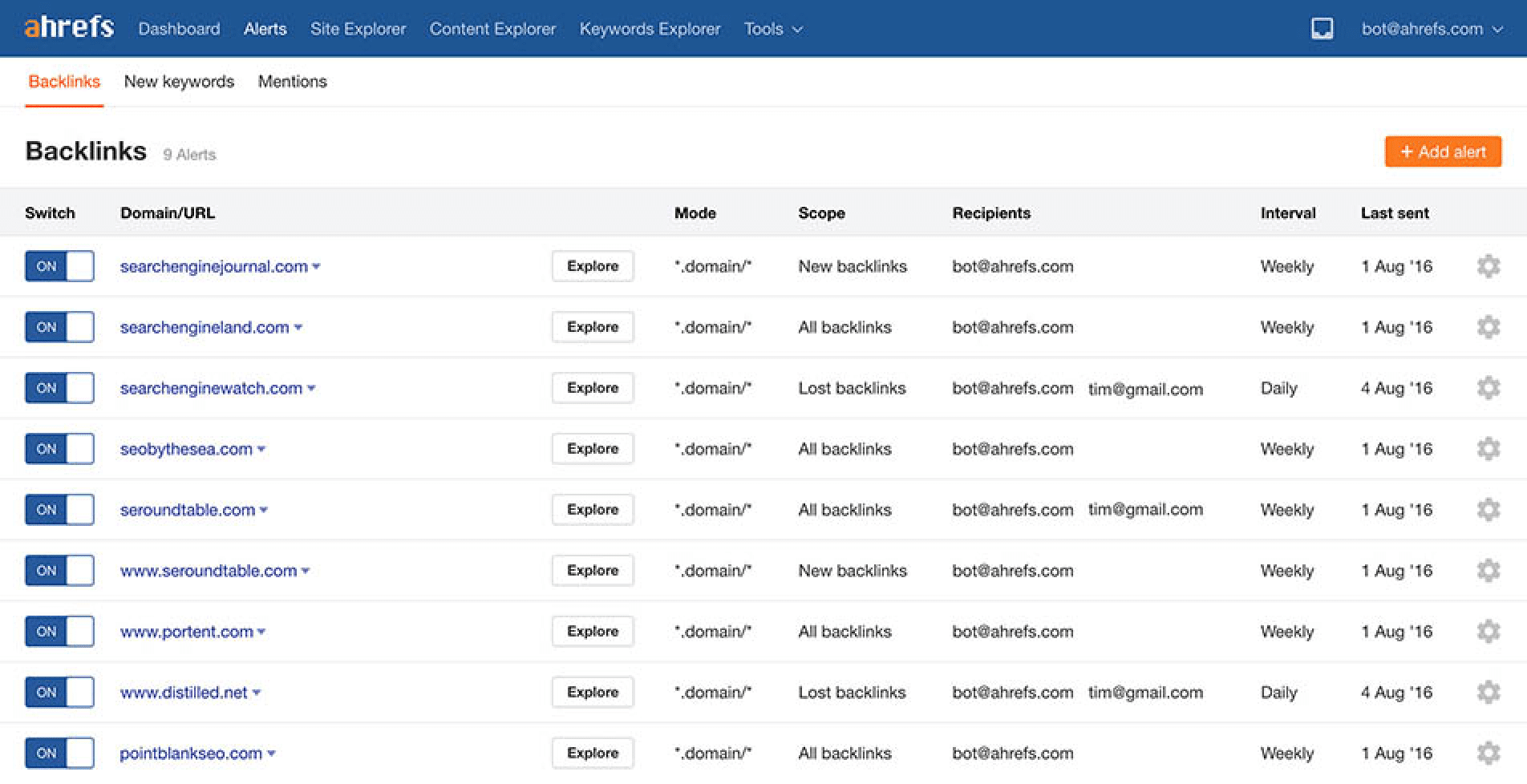
Using Ahrefs, you can now configure notifications for specific competitor domains. This means that when they land a backlink, you are notified in real-time.
(Image Source: Ahrefs)
Better still, you can also personalise your alerts to update you daily, weekly or monthly and filter these referring domains via certain keywords and even types of backlinks.
For example, if you plan to use the broken link building strategy, Ahrefs can directly inform you of any new ‘broken links’ that can be used to your advantage.
SEMrush Real-Time Backlink Audit
For real-time backlink monitoring, SEMrush is a brilliant tool to have in your back pocket.
With the ability to provide real-time updates on new, lost and broken backlink data, SEMrush is perfect for receiving automated updates as well as checking the health of competitors’ backlinks on the go.
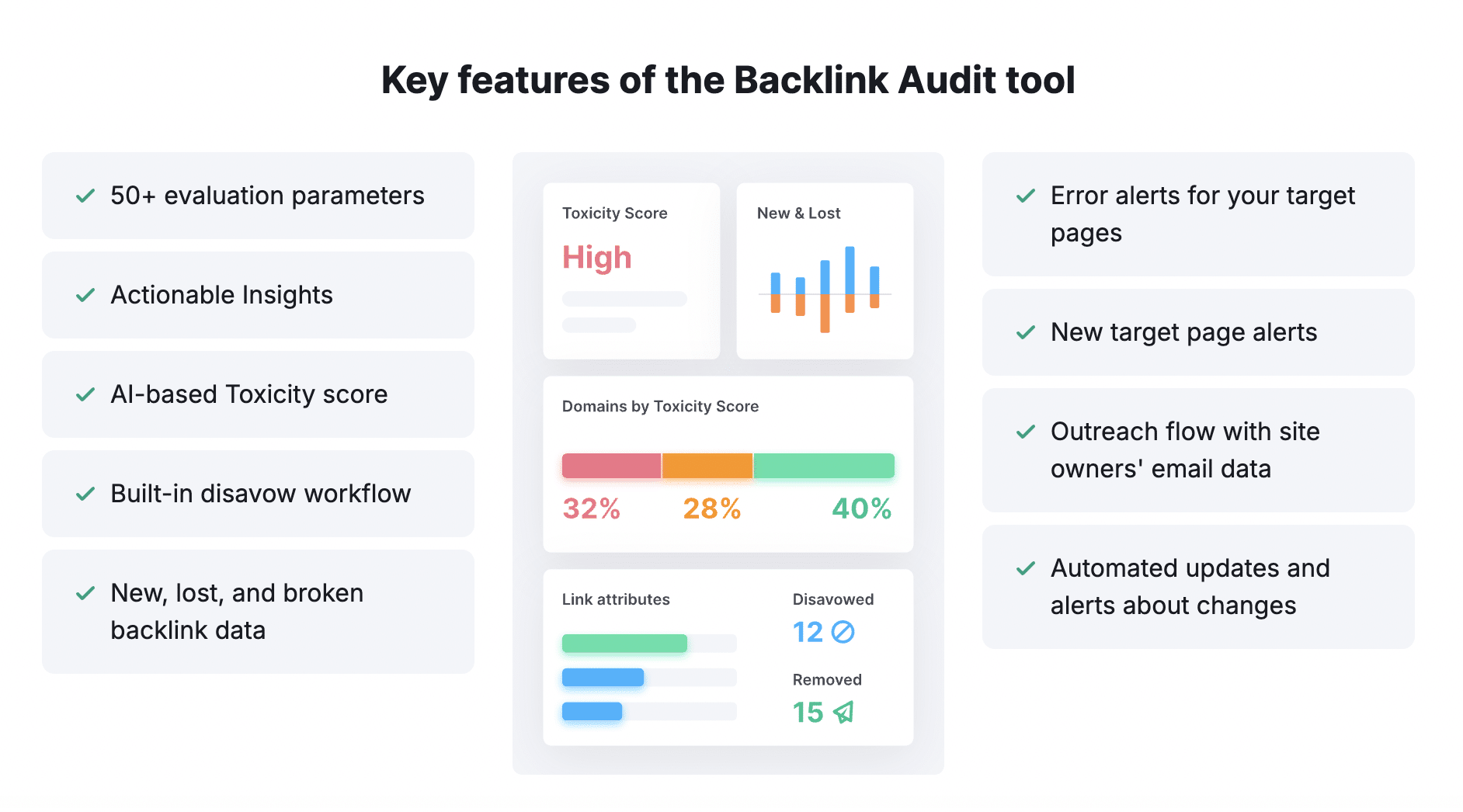
Better still, for outreach purposes, SEMrush also doubles as a database of email contacts for thousands of target sites.
If you want to invest in a tool that supports a long-term competitor backlink analysis strategy, SEMrush is a great addition to your arsenal.
Google Alerts
The easiest way to catch new mentions on the web without a specialised SEO tool is to set up Google Alerts.
To set up a Google Alert, first search for Google Alerts and in the search bar at the top, enter a topic, query or keyword you want to follow.
To alter your settings and filter results, click Show options. Here you can personalise various filters, changing how often you get notifications and the types of sites you’ll see.
You can even edit your target locale, which is crucial for local businesses.
Using queries like “link:competitor.com”, you can set up an alert via the search engine that informs you of any new backlinks published by your target competitors.
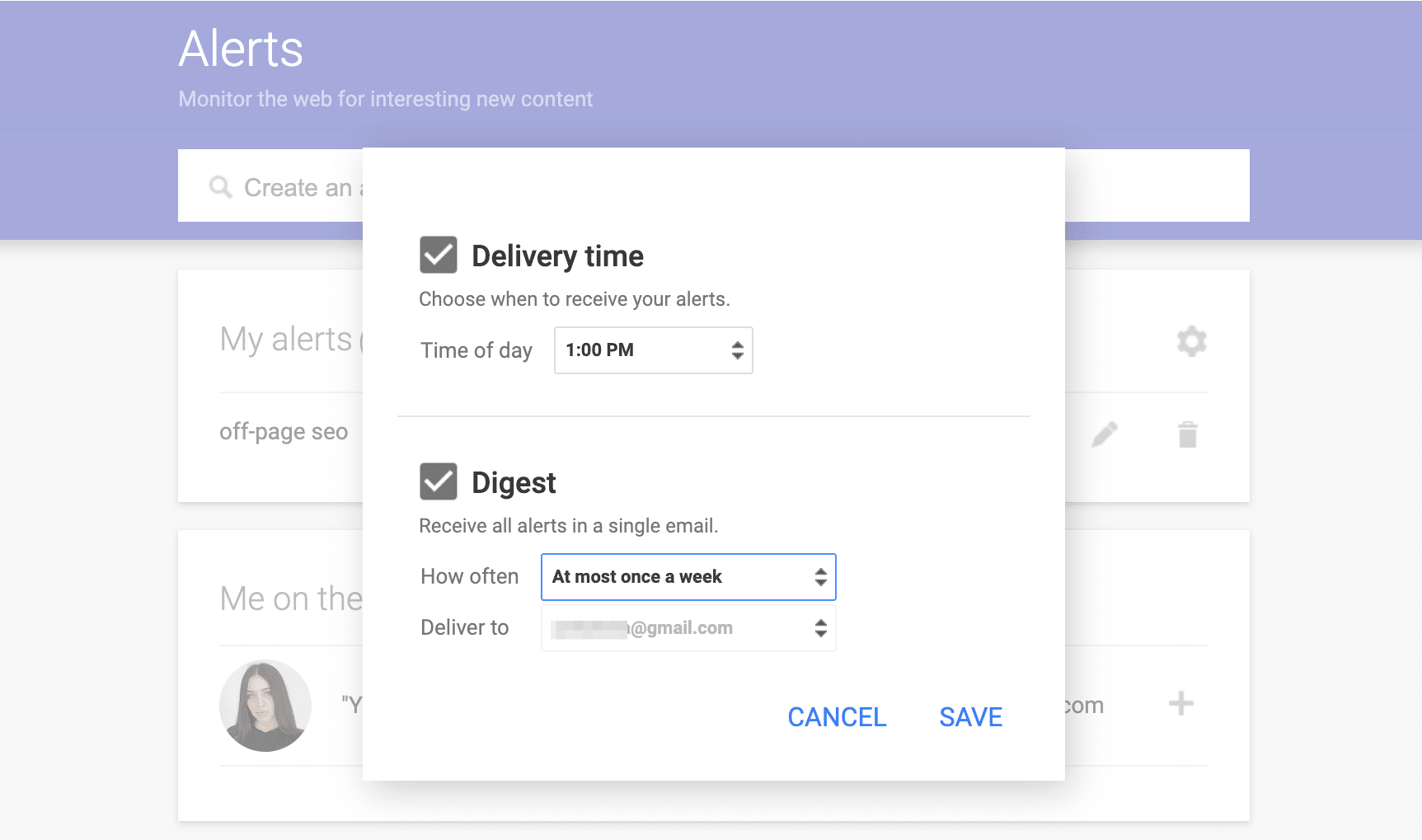
Once you’re happy, click ‘create alert’. You’ll then receive an email whenever Google finds new matching search results.
How to Win Your Competitor’s Backlinks With Solvid
Regularly analysing competitors’ backlinks is key to achieving a competitive advantage.
Not only do competitor backlink audits help you understand how rivals achieve high rankings, but they also give you a chance to replicate their success in your own link-building strategy.
To ensure your domain finishes on top, why not use Solvid’s link-building services to uncover and secure competitor backlink opportunities with proven, data-driven outreach strategies?
Our SEO agency saves your team time, reduces guesswork, and helps your brand earn high-quality links that knock competitors off the podium and drive long-term SEO growth.
If your link-building strategy is in need of a serious revival, get in touch with our friendly link-building team today for the next steps.
FAQ
What are competitors’ backlinks and why do they matter for SEO?
Competitors’ backlinks are links that direct traffic from a website to your competitor’s domain. If these links come from high-quality domains, they are a valuable source of ‘link juice’ for your competitor, signalling to a search engine that their site is a valuable resource.
Competitor backlink analysis is vital, as missing out on the same link opportunities could damage your own ranking position.
What is a competitor backlink analysis, and how does it work?
A competitor backlink analysis is an audit of your competitor’s backlink profile that reveals the backlinks pointing to your SEO rival’s website.
A competitor backlink analysis can uncover valuable information about your rival’s SEO profile, such as who is linking to them and what content attracts particular attention.
Brands use competitors’ backlinks to uncover valuable link-building opportunities for their own site and to identify gaps in their strategy by finding domains linking to rivals.
How to find backlinks of competitors using tools like Ahrefs
To conduct a backlink audit, you’ll need a backlink checker to streamline this process. Tools like Ahrefs, SEMrush or Moz are great for this, however, any tool that offers a ‘backlinks report’ function will work.
To take this one step further, invest in a tool that offers link-intersect/gap analysis, such as Ahrefs. This allows you to enter your domain alongside 3-5 competitors and immediately search for websites that link out to them but not you.
How can referring pages help uncover content gaps for backlink building?
Referral pages allow you gain more insight into the types of content linking out to your competitors and identify any potential content gaps where you could insert your link alongside.
Instead of viewing the referring domain alone, referral pages allow you to view the page the link is live on, providing more depth into the topics where your competitor is most commonly appearing.
What is broken link building?
Broken link-building is the process of replacing a broken competitor backlink with a new link pointing to your domain.
These are sneaky opportunities for you to get in contact with a target website’s editor and replace their link with yours, before they even know it has a 404 error.
The process is simple. Just input your competitor’s competing page into Ahrefs and select the ‘Broken Backlinks’ finder.
How do you approach websites that already link to competitors?
When approaching websites that already link to your competitors, it’s important to demonstrate that your linkable asset is superior, relevant and up to date, especially if your aim is to replace a competitor’s backlink.
For guest posting opportunities or to build a long-term partnership, try sharing helpful insights or resources before asking for anything.
How do you maintain backlinks once they’re live?
SEO isn’t a one-and-done activity. Once your backlinks are live, monitor them regularly, looking out for any 404 errors, link placement changes or anchor edits that may affect your SEO.
New competitor links will also appear, so don’t forget to keep one eye on your rival’s backlink profile for more opportunities to take advantage of.
 234 customers signed up in the last 30 days



 hello@solvid.co.uk