If you’re about to embark on your first link-building campaign, it’s important to remember that not all links pass on the same equity.
If you’re hoping to squeeze some link juice out of your SEO strategy, you must first understand the difference between a dofollow link and a nofollow link–one of the most frequently asked link-building questions in the industry.
In the battle of dofollow vs nofollow link building, which placement type should you be aiming for, and how do you land them?
This article will explore the key differences between dofollow vs nofollow links and teach you how to discover and use them in your SEO strategy.
What is a DoFollow Link?
Dofollow links, otherwise known as ‘follow links’, are a type of link placement that passes link equity (link juice) to your website.
A dofollow link is created by default whenever your website is linked to from another website. Dofollow links are HTML tags that need no extra coding and don’t have a “rel” attribute. They are just regular links without any publisher-specific edits.
Dofollow links send signals to the search engine that your domain is authoritative and trustworthy, improving your website’s ranking on SERPs as a result.
Types of DoFollow Links:
- Editorial Links: These are organically placed by blog editors or authors in relevant content and are considered the most authoritative type of dofollow link.
- Guest Post Links: These dofollow links are placed within a guest post on a contextually relevant domain.
- Business/Directory Links: To score dofollow homepage/service page links, adding your website to industry-specific or local directories that do not apply nofollow attributes is a great way to improve your brand visibility as a business/service in a relevant search.
- Resource Page Links: These are dofollow links from curated listicles of recommended resources on a specific, relevant topic.
- Image Links: Not all dofollow links must appear in text content. Dofollow links can also be attached to a helpful infographic instead.
- Internal Links: The easiest way to build dofollow links to your web pages is to link to your own content. Dofollow links built from one page to another on the same website help pass page authority and improve your site structure.
Can DoFollow Links Improve your SEO?
Google views dofollow citations as votes of confidence that carry weight on the web. This is why some of the highest-ranking pages in SERPs have a powerful backlink profile.
In fact, a recent Backlinko study found that the top-ranking pages in Google search had 3.8 times as many backlinks as results 2-9 on SERPs.
While search engines have over 200 ranking factors, there’s no denying that dofollow link building remains one of the top signals to build authority and credibility in online search.
If your website is constantly receiving positive endorsements from domains in the same search niche, search algorithms take this as a sign that your content is helpful and worthy of a top place on SERPs.
To build a powerful backlink profile that raises your SEO game, ensure that dofollow links are organically placed on high-quality domains that are contextually relevant to your content.
Search engines like Google use organic citations to generate SERP results and inform AI Overviews in an era of zero-click search. If you want your website cited as a helpful source, the key is to build dofollow links to contextual resources that enhance the content they appear in.
Placing dofollow links on low-quality, irrelevant domains could pass on negative link equity, risking search engine penalisation of your own website for link spamming.
Overview of the Benefits of DoFollow Links
Let’s review some of the key benefits of dofollow links:
- Boosts Domain Authority: Dofollow links act as a vote of confidence in your domain and its authority, promoting search engines to increase your ranking and move your content up the SERPs.
- Improves Organic Traffic: Each time your dofollow link is cited in a relevant publication, it increases your chances of scoring referral traffic as a result. If your linked content is helpful and offers insights into a similar niche/topic, it will appeal to the same target audience.
- Enhances Generative Search Visibility: In an era of zero-click search, AI overviews dominate search traffic. In fact, searches with AIOs have a 35% lower CTR for ranking competitors. Building powerful dofollow links can increase your website’s chances of being featured in a generative search result, especially if you’re cited in high-ranking blogs and publications within the search niche.
- Builds Credibility: Landing dofollow links on high-authority websites is key to establishing credibility with search engines and your target audience. Multiple citations from authoritative sources give the impression that your website is a trustworthy source of information and deserves a top ranking position on SERPs.
Can you buy DoFollow Links?
Yes, you can buy dofollow links, however, the process is not as easy as it looks. When you buy a dofollow link, you bypass the steps it takes to organically build a powerful link profile. While this is tempting, you should only buy dofollow links from reputable link-building agencies.
While outsourcing link building is a common practice, it can lead to search engine penalties if you’re not careful.
Here are some of the key considerations to consider before buying dofollow links:
Does your Chosen Link-Building Partner Prioritise White Hat Strategies?
There’s no doubt that white-label link building is safer than buying low-quality, automated links.
Buy dofollow links from a link-building agency that uses only white-hat techniques, such as guest posting, broken-link building, and digital PR, to place your links organically.
Avoid any link-building services that offer fast returns on low-quality domains.
Can You Afford to Buy DoFollow Links?
High-authority, niche-relevant link placements can cost up to £500+ per backlink, especially on competitive websites.
Don’t settle for dofollow placements on low-quality sites to save money. While these are fast and convenient, they offer lower SEO returns and a higher risk of search engine penalties.
Have you Thought About the Risks?
If you buy dofollow links on low-quality sites or through a link builder operating on link farms/PBNs, you run the risk of being penalised by the search engine for manipulating its ranking system.
Buying negative backlinks results in lower search rankings and a blow to your credibility as an authoritative source.
If you choose to buy dofollow links, avoid black hat services and focus on starting a partnership with a white-label link-building agency that can support your SEO growth long-term.
What is a Nofollow Link?
Nofollow links are still backlinks, however, with the added attribute of “rel=nofollow” to the HTML code.
Nofollow codes are added to hyperlinks when a domain wants to instruct a search engine to ignore them. This means that when a search engine crawls the webpage, it will not pass on any link equity to the linked domain.
Apart from this, the backlink still works in exactly the same way. If a site visitor clicks on the link, they will still be directed to the chosen website and drive organic traffic for the linked domain.
So why does ‘nofollow’ exist? After the introduction of Web 2.0, Google introduced the attribute “rel=nofollow” on hyperlinks to help prevent content spam. This was after people started commenting on blog posts with links to their websites to raise their domain ranking.
In an effort to create a more organic ranking system, Google’s search algorithms only began passing link juice to backlinks that were intentionally added by site editors, and we left as dofollow.
Adding rel=nofollow to any other links was an easy way for websites to protect their domain from any potential penalties due to being associated with lower-quality, spammy links.
In 2019, Google also introduced two new attribute values and a clever hinting system. These were rel=”ugc” for user-generated content and “rel=sponsored” for sponsored content. This means that while a nofollow tag meant that a link was not directly associated with a website, search engines could still crawl the added placement and pass over some equity to linked domains.
Today, nofollow links are used when a site prefers not to endorse your domain. However, this isnt necessarily a hindrance to your SEO strategy. Nofollow links can still drive serious traffic to your website, and in most cases are still treated as an authoritative ‘hint’ for the search engine.
If a linked source appears helpful and relevant to the search context, it could still be used in an AI Overview or be pushed up SERPs at the search engine’s discretion.
Do NoFollow Links Help SEO?
It’s no surprise that link builders aim to build more dofollow links than nofollow links in a competitive link campaign, but this doesn’t render nofollow links useless.
In the great debate of dofollow vs nofollow, nofollow links are often seen as the lesser placements; however, they still have a giant impact on your SEO profile if placed strategically.
Nofollow links can still directly impact rankings. With Google’s hint system in place, search engine crawlers still take nofollow links into account when making ranking calculations.
This, alongside referral traffic and a natural and diverse link profile, makes the addition of nofollow links to your website still super important for your SEO health.
Overview of the Benefits of NoFollow Links
Do nofollow links help SEO? Let’s review some of the key benefits of nofollow links:
- Drives Traffic: Nofollow links on high authority websites drive organic traffic to your webpage. For example, some of the largest publications, such as Forbes, make all external links nofollow, yet these backlinks drive some of the best traffic for your website.
- Increases Exposure: Limiting your backlink profile to dofollow links only misses out on plenty of opportunities for brand exposure and mentions. Not only does it drive visitors organically to your site, but a brand mention or a sponsored nofollow tag builds visibility in an AI search engine for a mention in a generative result.
- Builds Backlink Profile Diversity: Let’s forget about doffollow vs nofollow for a minute. Any powerful backlink placement on a relevant, high-authority domain improves your backlink profile diversity. Search engines value natural backlink profiles that include a mix of dofollow and nofollow links. A domain with only dofollow referrals could appear manipulative or unnatural to search engines, potentially triggering penalties. Nofollow links help your site demonstrate healthier growth.
How to Check DoFollow and NoFollow Links
There are plenty of ways to check dofollow and nofollow links. These include viewing the code in the browser itself, using browser extensions that highlight nofollow links and investing in a dedicated SEO tool that alerts you when dofollow vs nofollow links are published.
Using Browser Code
The easiest way to determine whether your link is dofollow or nofollow is to examine the link code in Chrome.
To do this, right-click your link within a piece of published content and choose ‘Inspect’ from the scroll-down list.
Here you can view the page code and your highlighted link code alongside it. If a ‘rel’ attribute is absent, then you are looking at a regular dofollow link.
If your link is nofollow, you’ll see something that looks like this: “rel=nofollow”, “rel=sponsored”, “rel=ugc”, “rel=noopener nofollow”
Using Browser Extensions
Google Chrome offers a free NoFollow browser extension that highlights any NOFOLLOW, UGC, and SPONSORED attribute values on a webpage in a red square. This makes it easy to instantly spot any nofollow placements that you might need to intervene with.
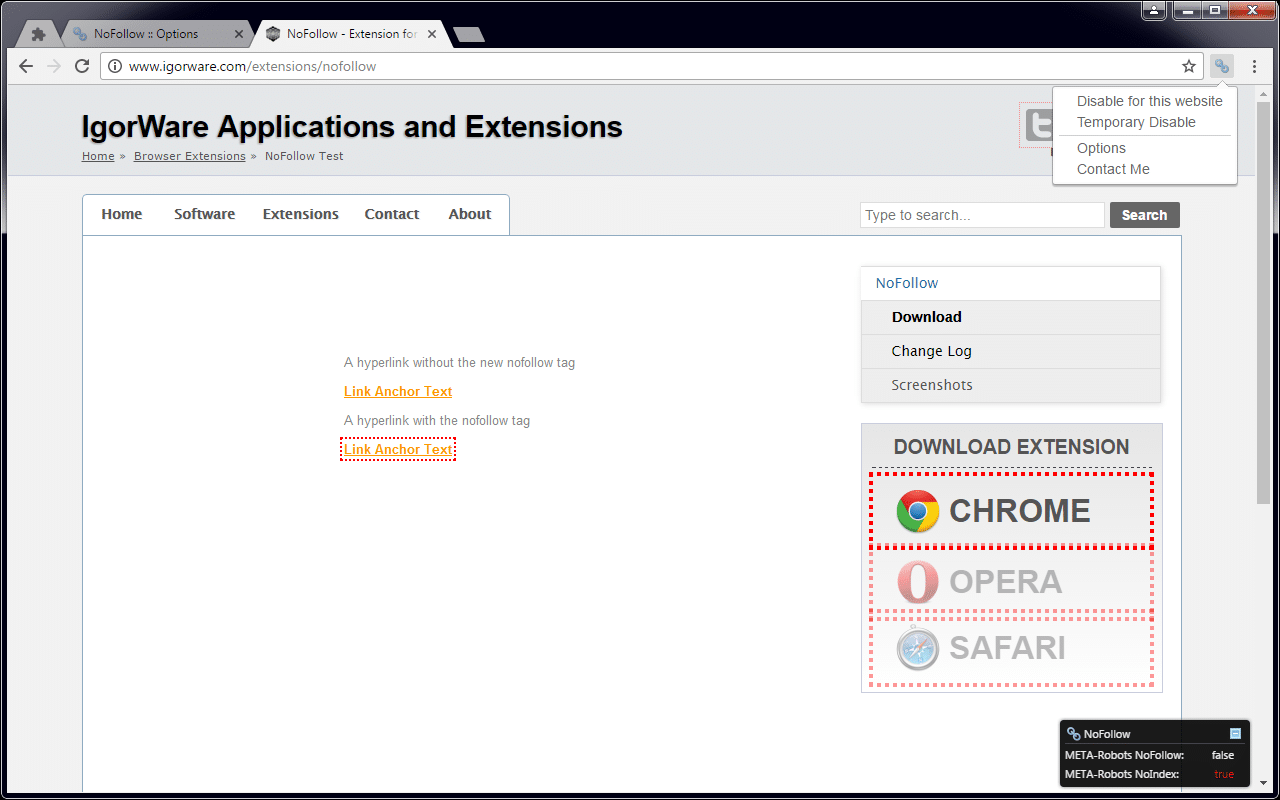
(Image Source: NoFollow)
A similar version of ‘NoFollow’ is also available on Firefox to help you detect nofollow and noindex meta tags on your target webpages.
Using an SEO Backlink Checker
For a more in-depth view of your backlink health, invest in an SEO tool with a built-in backlink checker to check dofollow and nofollow links.
Here you can set alerts for nofollow and dofollow links, and analyse your backlink profile as a whole.
In this case, we’re using Ahrefs to show you how to check for nofollow links.
Start by typing your domain into the tool’s Site Explorer, then navigate to ‘Backlinks’ in the left sidebar.
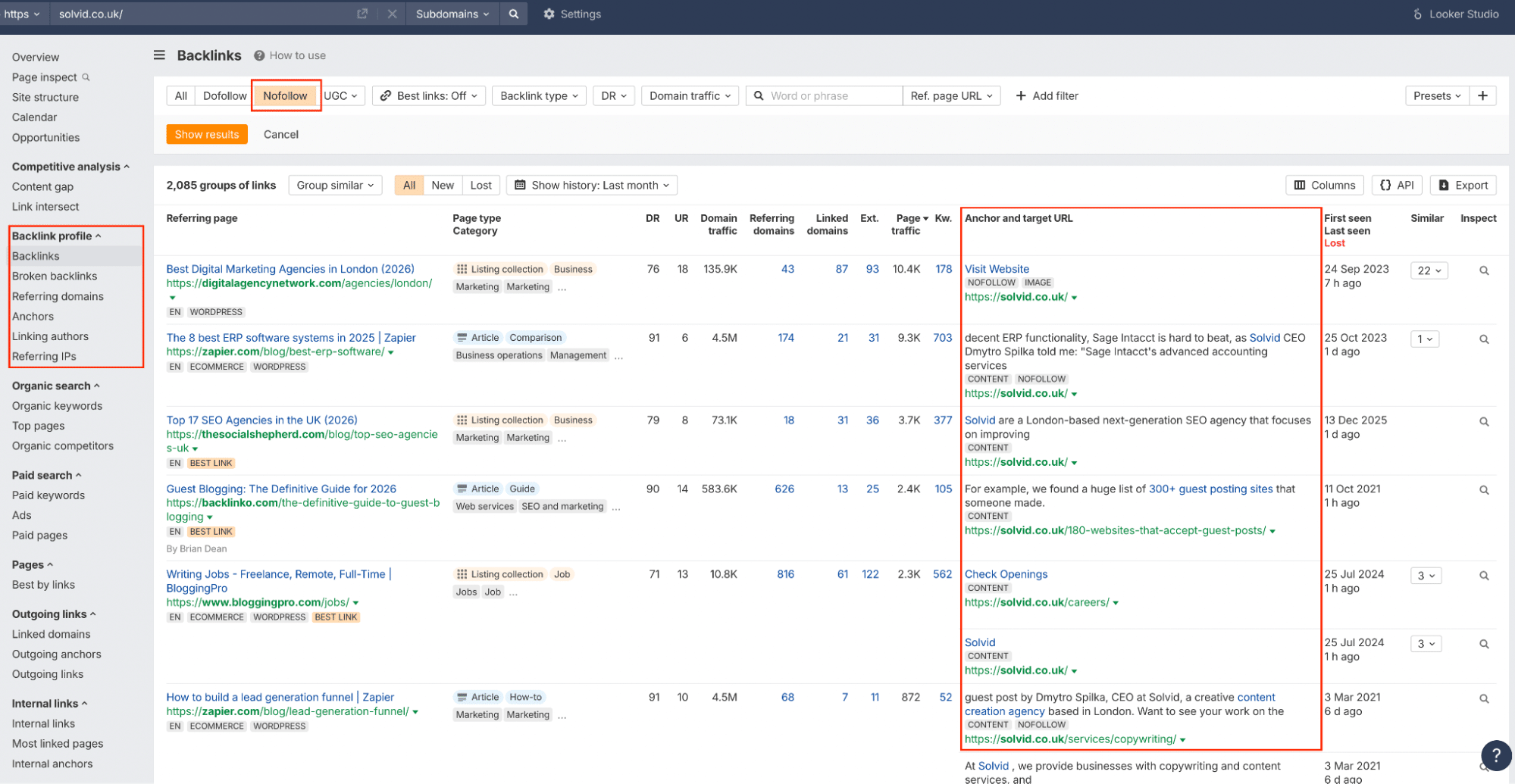
Here you’ll see a list of all of your live backlinks and a column that reveals whether each one is dofollow or nofollow.
Filter these results by ‘NoFollow’ and review the list of backlinks with a rel=”nofollow” attribute or similar.
If you want to view your dofollow vs nofollow links distribution, you can also use tools like SERanking to track your backlink target ratio, your percentage of dofollow links in comparison to your nofollow links and any new or lost backlinks that need attention.
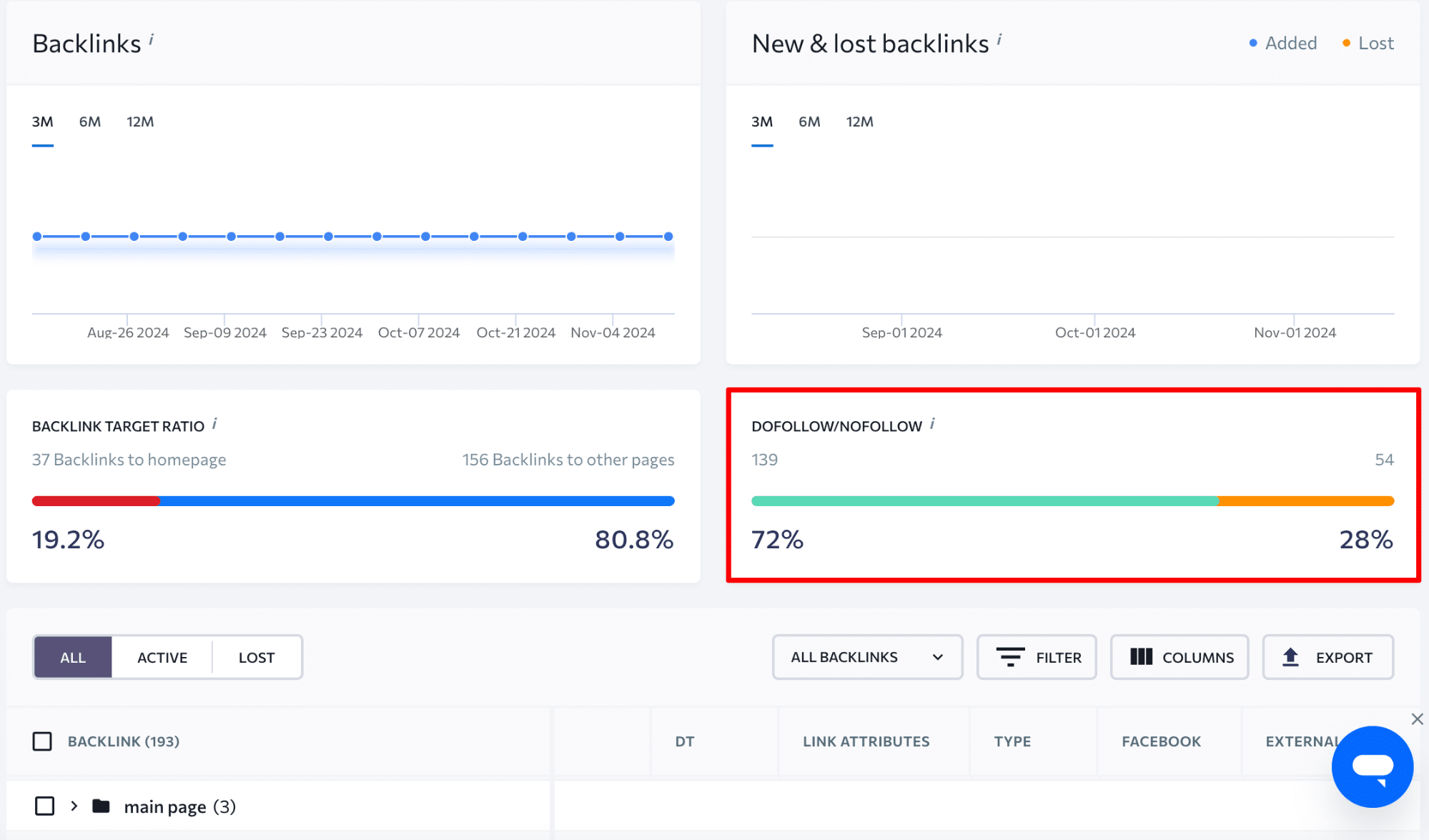
(Image Source: SE Ranking)
DoFollow vs NoFollow Links
In the battle of dofollow vs nofollow, the winner isn’t as clear as you would think. Both dofollow links and nofollow links influence your SEO rankings, just in different ways.
While dofollow links help your domain build trust and credibility in the eyes of the search engine, nofollow links still drive organic traffic to your website and can help you increase brand exposure on some of the top publications you’d miss out on if you only build links with dofollow placements in mind.
In an ideal world, building a backlink profile with only dofollow links would deliver the best ranking results for your domain. However, as search continues to evolve, it’s now common to have a diverse backlink profile that includes dofollow and nofollow links.
In an era of AI-powered search, mentions of your brand alone could help you find your way into an AI Overview. Sometimes, landing a brand mention and a nofollow link on a top-performing domain that is relevant to your search niche increases your AI visibility more than a dofollow link on an irrelevant website.
When to Land DoFollow vs NoFollow Links
When do you land a dofollow link vs nofollow link? This is a common question amongst SEO professionals, especially when learning how to build a backlink profile.
In most cases, having the chance to place a dofollow link is always the right answer, but let’s take a closer look at the best opportunities for landing dofollow vs nowfollow links:
When to Land a DoFollow Link
- Editorial Content: When you are submitting a high-quality resource to a partner or high-ranking domain that you trust.
- Internal Linking: To help guide search engine crawlers through your website and pass authority between each linked page.
- Guest Posting Opportunities: When adding a link organically to a guest post that will appear on a relevant domain in your search niche.
When to Land a NoFollow Link
- User Generated Content: When you add a link to blog comments, forum posts, and guestbook entries. Dofollow links here could be viewed as spam.
- Untrusted or Unverified Sources: If you’re not confident about the reputation of the domain you’re placing a link on, opting for a nofollow link could protect your backlink profile.
- Affiliate/Sponsored Links: These links are often coded with a rel=”sponsored” attribute to inform Google of a commercial relationship and to prevent passing authority. However, alongside an accompanying branded anchor, they can still contribute to your visibility in an AI search.
The key here is balance. A natural link profile includes both dofollow links and nofollow links.
A simple rule of thumb: if you vouch for the site, choose dofollow. If not, a nofollow placement is the safest option for sustainable SEO growth.
How to Land Powerful DoFollow and NoFollow Links
Landing dofollow links and nofollow links is a process that takes time and effort from your SEO team.
From creating high-value linkable assets to link insertions, let’s take a closer look at some of the best strategies for landing powerful dofollow and nofollow links.
Create High-Value Content
Whether you’re building dofollow or nofollow links, you must first create the linkable asset you aim to point back to when landing a backlink placement.
Linkable assets are high-value pieces of content, such as original research, infographics, and comprehensive guides that industry experts want to reference.
These are more likely to be picked up by editors organically and are easy to outreach to your target sites.
For example, take a look at our feature here on Backlinko’s recent blog post on guest blogging. They have organically included a dofollow link to our helpful resource on a list of 300+ websites that accept guest posts.
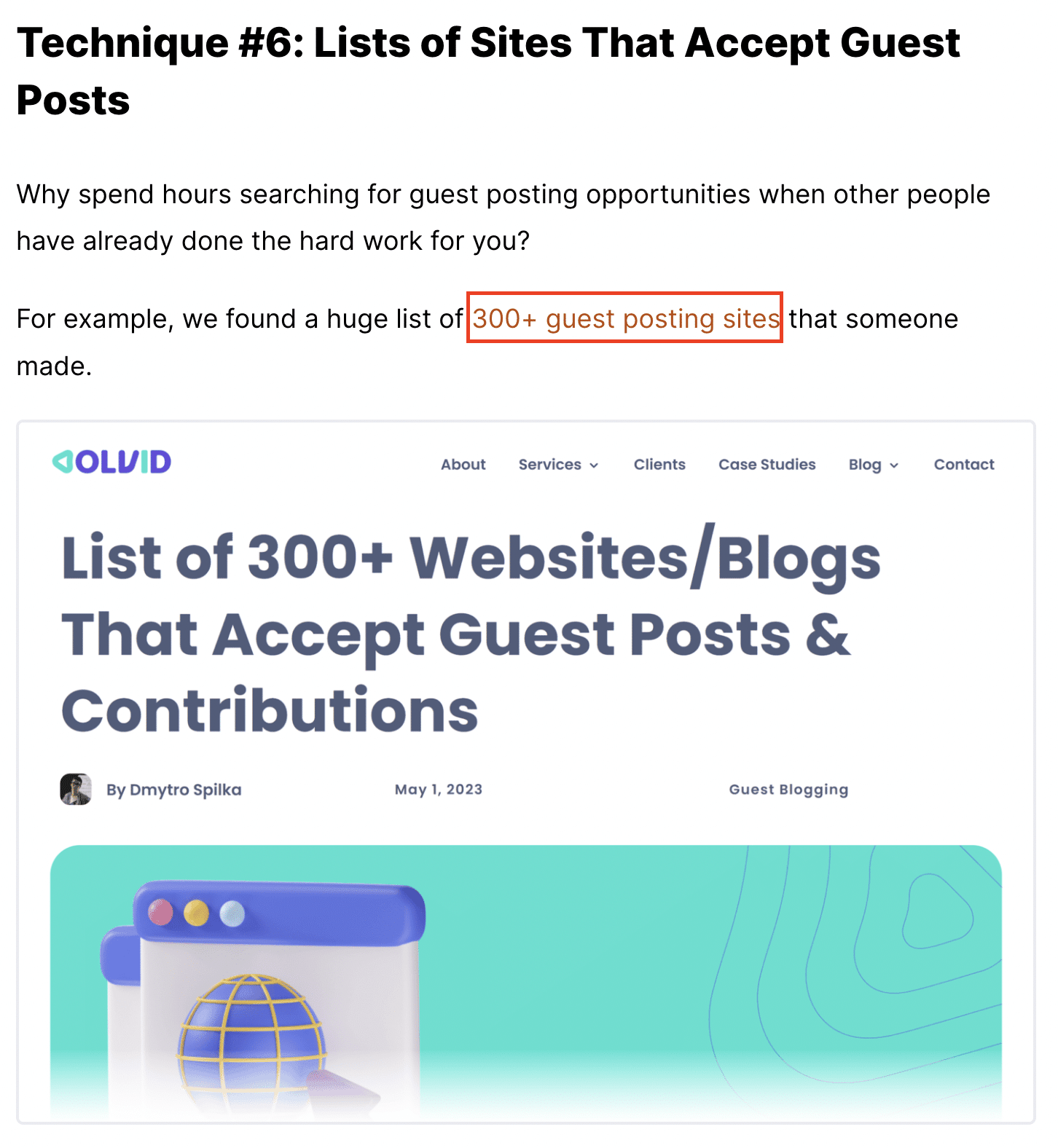
When you create relevant, high-quality resources for your search niche, you’ll find that some dofollow and nofollow links are generated automatically to enhance the content of competitors and other editorial content with the same target audience.
Try Guest Posting
If you want to place dofollow or nofollow links in a specific publication or on a target domain, why not try guest posting?
Guest posting or guest blogging consists of writing a piece of relevant, targeted content for a specific website that organically includes a link back to a product, resource or client. This content is then outreached to the editor of the website or publication for publishing.
64.9% of SEO teams use guest posting to build high-quality links, however, most only complete 1-5 guest post placements per month.
Guest posting is a long-winded strategy, requiring time and effort from SEO teams to go back and forth with editors, follow up on outreach campaigns and craft compelling, target-relevant content.
This is why a large number of businesses use guest posting services to speed up the process and reach popular publications faster.
Start Linking Internally
Linking internally is the easiest way to build dofollow links. This process includes linking from one page on your website to another to help search engine crawlers navigate your content more effectively.
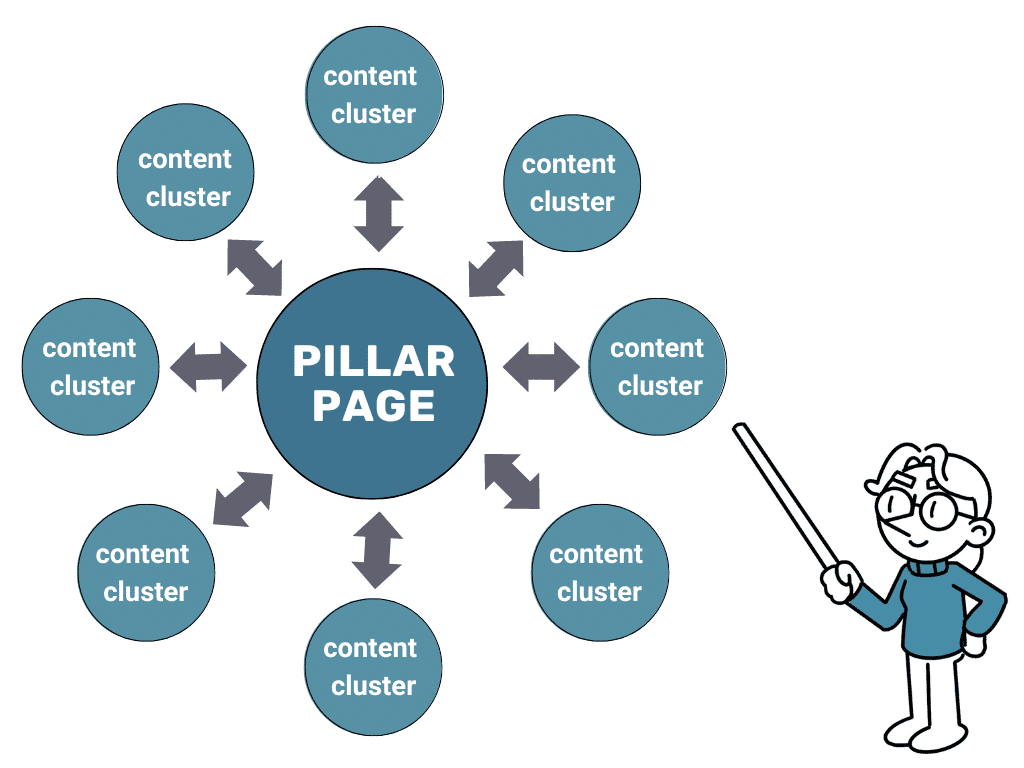
The best internal linking strategies begin with identifying a key ‘pillar’ (high-value pages) and linking to them from contextually relevant blog posts on your website.
(Image Source: inLinks)
Creating content around this high-value page helps you build a cluster of link opportunities that provide breadcrumbs to the search engine about your expertise on that topic.
It’s also important to build dofollow links on your top-performing, most-linked-to pages to pass “link juice” to newer or less-visited pages.
Engage With Forums & Communities
Knowing when to build dofollow vs nofollow links is crucial, especially when trying to create a diverse backlink profile.
To increase your nofollow link count, try participating in relevant discussions on forums and within communities that contain your target audience.
Platforms like Reddit or Quora are brilliant for this, offering your business the chance to provide value and a nofollow link in exchange for engagement from your target demographic and referral traffic that signals credibility to the search engine.
Work on your Anchor Text
Anchor text remains a vital component of any dofollow or nofollow link-building strategy. A healthy link profile is made up of a mix of branded, navigational, and descriptive anchors across all dofollow and nofollow links.
When building dofollow links in editorial content, guest posts or internal articles, avoid over-optimisation and exact-match phrases. Instead, strive for relevance and variety to help position your linked content as helpful, rather than promotional.
For nofollow links, maintain the same approach and craft anchors around text that informs readers about the destination. This is the key to enhancing user trust and driving referral traffic, especially when the placement doesn’t automatically pass on link juice to your website.
Broken Link Building
Even if you can’t decide on dofollow vs nofollow links, broken link building is an opportunity that shouldn’t be overlooked.
Broken link building is the process of finding broken links on high-authority websites and suggesting your relevant content as a replacement.
To start broken link building, you need an SEO tool such as Ahrefs or Semrush to first identify the broken links on target websites.
On Ahrefs, for example, simply type in your target website into the tool’s Site Explorer and navigate to ‘Broken links’ to discover which dofollow or nofollow placements have 404 errors.
Take a look at this example for Moz.com:
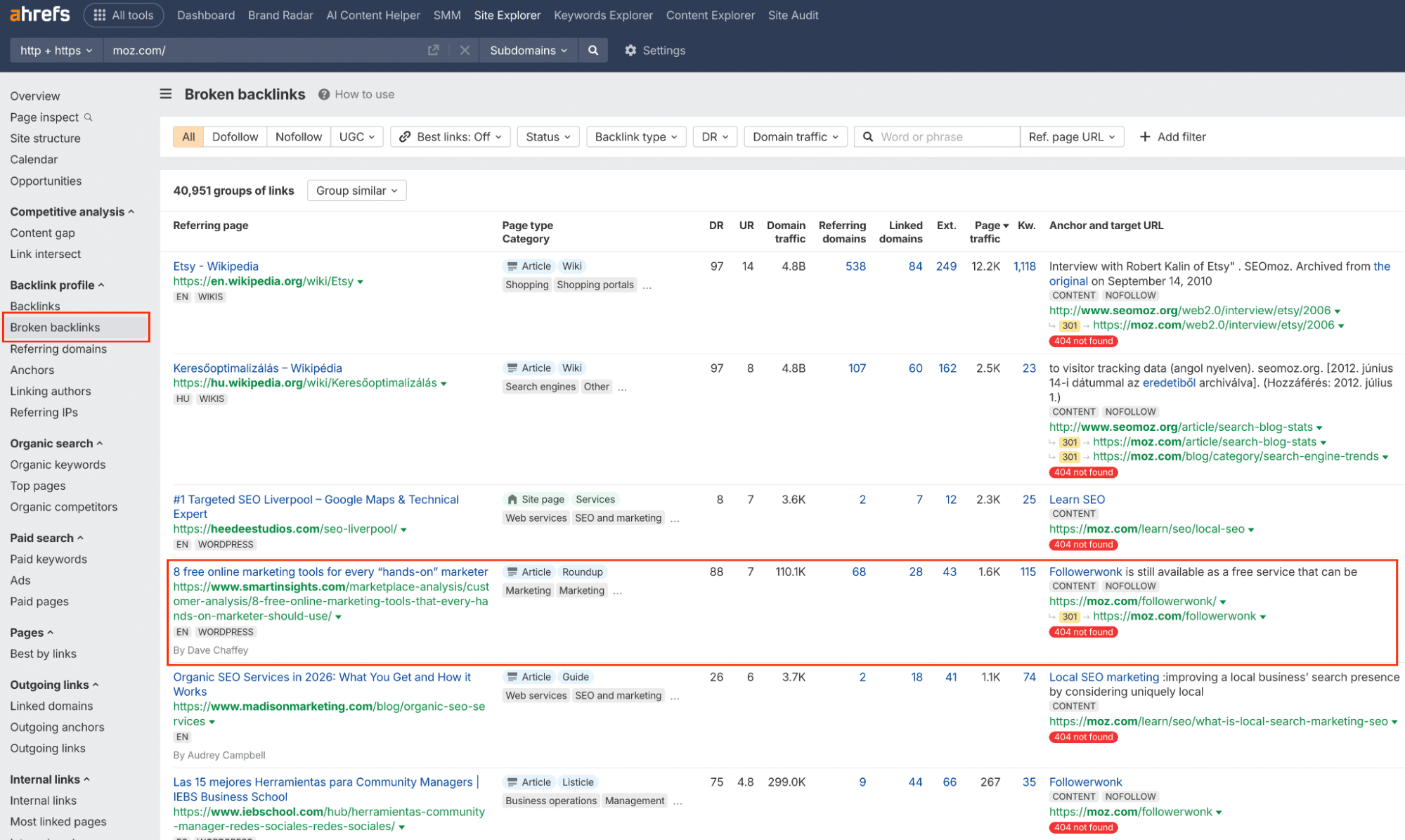
As you can see here, an article on ‘8 free online marketing tools’ has a broken link pointing to Moz. If you were a direct competitor, looking to land a link on the same domain, this would be a perfect opportunity to reach out and offer a replacement link that diverts attention to your tool instead.
DoFollow vs NoFollow: What’s Next?
There’s no doubt that both dofollow and nofollow links both contribute to a healthy backlink profile.
While dofollow backlinks still pass on more link juice to your domain, nofollow links shouldn’t be ignored, especially when it comes to generating search traffic and raising AI visibility in an era of zero-click search.
So, what’s next for dofollow vs nofollow link building? As we move into a new AI-powered SEO playing field, all link-building strategies will prioritise contextual relevance over anything else.
To stay in Google’s good books, aim to create a diverse link profile that balances dofollow and nofollow links from authoritative, relevant sources that provide genuine value for your target readers.
FAQ
What Is the Difference Between DoFollow vs NoFollow Links?
Dofollow links, otherwise known as ‘follow links’, are a type of link placement that passes link equity (link juice) to your website. A dofollow link is created by default whenever your website is linked to from another website. Dofollow links are HTML tags that need no extra coding and don’t have a “rel” attribute. They are just regular links without any publisher-specific edits.
Nofollow links are still backlinks, however, with the added attribute of “rel=nofollow” to the HTML code. Nofollow codes are added to hyperlinks when a domain wants to instruct a search engine to ignore them. This means that when a search engine crawls the webpage, it will not pass on any link equity to the linked domain.
Do NoFollow Links Help SEO Rankings?
Nofollow links still have a giant impact on your SEO profile, even if they don’t directly pass on link juice.
With Google’s hint system in place, search engine crawlers still take nofollow links into account when making ranking calculations.
Nofollow links still generate referral traffic, especially when they are placed on high-authoirty websites. They are also a powerful addition to a natural and diverse link profile, which is super important for sustainable SEO health.
How Can You Check DoFollow and NoFollow Links on Your Website?
There are plenty of ways to check dofollow and nofollow links. These include viewing the code in the browser itself, using browser extensions that highlight nofollow links and investing in a dedicated SEO tool that alerts you when dofollow vs nofollow links are published.
Should You Prioritise DoFollow or NoFollow Links in Link Building?
In the battle of dofollow vs nofollow, the winner isn’t as clear as you would think. The best link-building strategies prioritise both dofollow and nofollow links when building a healthy link profile.
While dofollow links help your domain build trust and credibility in the eyes of the search engine, nofollow links still drive organic traffic to your website and can help you increase brand exposure on some of the top publications you’d miss out on if you only build links with dofollow placements in mind.
Is It Safe to Buy DoFollow Links for SEO?
Yes, it is safe to buy dofollow links, but only from a reputable white-label link-building agency.
Buy dofollow links from a link building agency that only uses white hat techniques such as guest posting, broken link building and digital PR to place your links organically.
Don’t settle for dofollow placements on low-quality sites to save money. While these are fast and convenient, they offer lower SEO returns and a higher risk of search engine penalties.
What Does an Ideal DoFollow vs NoFollow Link Ratio Look Like?
A natural backlink profile generally consists of a mix of dofollow and nofollow links. Dofollow links should make up 60-80% of your link profile to pass on enough link juice to raise your rankings. 20-40% of your link profile will likely be dominated by nofollow placements from paid links, forums, directories and social media. However, these links still indicate organic growth to search engines.
 234 customers signed up in the last 30 days



 hello@solvid.co.uk