What is Alt Text (Alternative Text)?
Another common term in SEO is alt text, which is short for alternative text. This refers to a written description of an image that’s positioned in a webpage’s HTML.
Alt text exists for two important reasons. One, for audiences who cannot see the image in the same way that a sighted visitor can, such as those using screen readers and search engines. Two, for Google crawlers that can’t ‘see’ on-site images in the same way that visitors do.
Accessibility remains the most important function of alt text. Millions of people rely on screen readers to browse the internet, and without alt text, every image they encounter is simply silence to them.
Here’s an example of alt text:
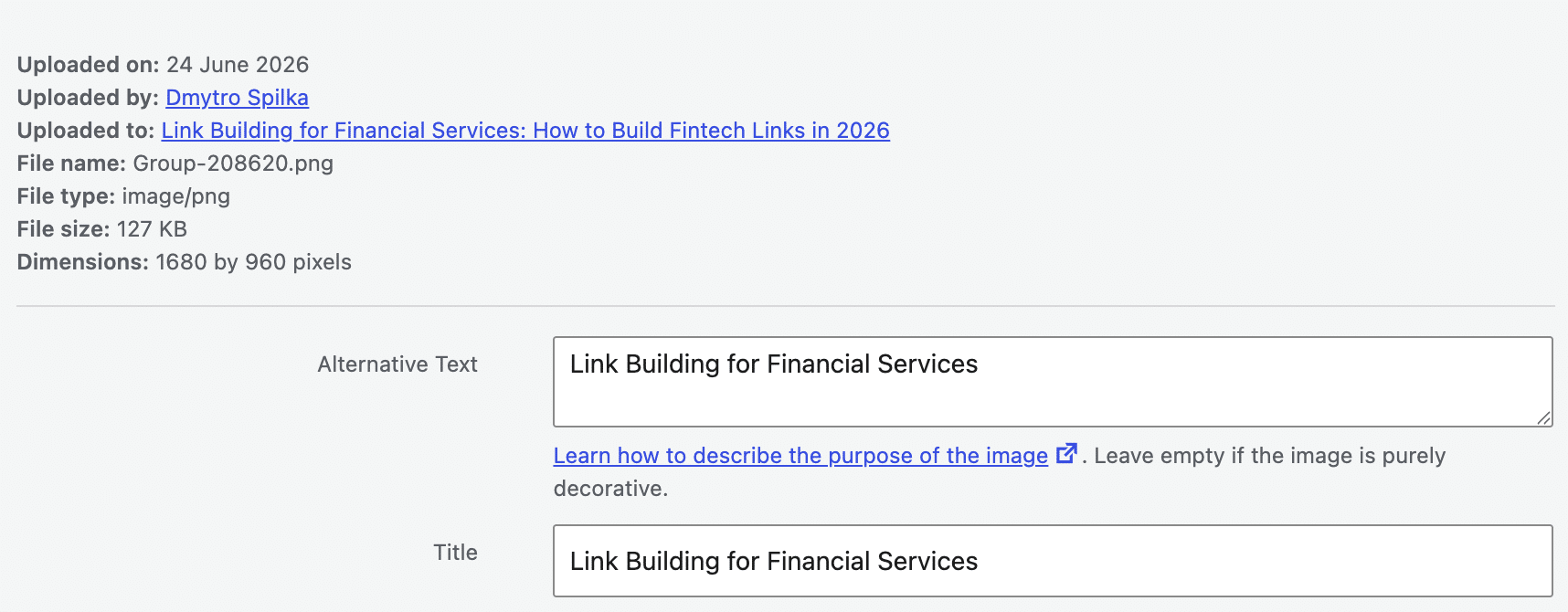
How to Use Alt Text
When used properly, alt text can describe images in plain language so the page makes contextual sense. This isn’t just about making your website more accessible; in many places, it’s a legal requirement under accessibility standards, and Google has retained a strong focus on valuing user-friendly websites higher.
In terms of SEO, alt text can help your pictures rank higher in Google Images results, which can work to improve the overall traffic you receive for your website while giving Google extra context about what your page is all about.
Also, when an image is used as a link, its alt text functions in a similar way to anchor text, which lets search engines know what the linked page is all about. With this in mind, it can be a tool to help provide higher levels of context to your website.
Writing Alt Text
So, how should you approach your alt text? Writing it is all about being as accurate and natural as possible. Be sure to describe what the image actually shows. As a rule of thumb, treat it as though you’re explaining your picture to someone over the phone. For instance, “woman using her smartphone to order lunch” is far more useful to everyone than “best takeaway apps to download.”
If you’re using your alt text to keyword stuff, you’re doing it wrong. Cramming keywords into your text doesn’t provide any context and reads terribly to the screen readers that some users may depend on. It can also look manipulative and desperate. Instead, look to include a relevant keyword only wherever it genuinely fits in with the description.
Practical Considerations
Another practical note is that purely decorative images don’t necessarily need alt text. If there’s no meaning other than to add a flourish with a picture on your page, your content will flow far better than if you choose to include some text for the sake of it.
It’s also worth noting that crawlers already know that they’re looking at a picture, even if they can’t see what it is. With this in mind, you don’t have to start every description with ‘image of.’ Instead, keep your description concise and written primarily for a human reader. By nailing this part of the process, the SEO benefits will naturally flow.
 194 customers signed up in the last 30 days



 hello@solvid.co.uk