AI search is dominating the SEO landscape in 2026. With more than half of all search queries now displaying an AI Overview, the era of zero-click search is upon us.
The question is, what does this mean for your website’s ranking strategy? As 60% of searches with AI summaries end without an external click, ranking high in SERPs may no longer be the key to driving traffic to your domain.
The solution is simple. ‘If you can’t beat them, join them’. Instead of trying to work around the AI search revolution, it’s time to adapt your SEO strategy to appeal to AI search engines in 2026.
With this in mind, we’ve put together a guide to mastering AI search engines, generative tools like ChatGPT, and what AI search ranking factors your team must prioritise to boost visibility in a zero-click playing field.
What is AI Search?
AI search retrieves information from an online database, just like traditional search engines; however, with added natural language processing and machine learning, AI search tools are able to provide consumers with direct answers instead of a list of links.
Rather than displaying a classic SERP result, AI search tools eliminate the need to scroll through an endless list of domains, instead, using semantic understanding, AI search engines identify the underlying meaning and context of a query, offering a targeted answer to the question, rather than exact keyword matches.
How AI Search Works
Conversational queries are becoming more common in the search world. Users no longer enter short keyword strings, instead opting for full sentences and detailed queries.
This is especially true when using a conversational search tool like ChatGPT or Claude.
AI search engines then use these conversational queries to decide on the context, before scanning multiple web pages, combining the crawled knowledge and writing a custom summary with citations.
Whether this result comes in the form of an AI Overview or a ChatGPT paragraph, all AI search tools allow interactive follow-up. This means that users can reply to the initial response with more questions to keep the conversation going, all without the need to click on a domain link.
How is AI Search Different from Google Search
AI search differs from traditional Google search in a number of ways. Not only are AI search tools more advanced, but they provide searchers with a completely different experience.
Here are some of the most common differences between AI search and Google search:
SERPs vs Direct Answers: Google search uses keywords within a search query to point the user to a number of exact-match websites. AI search, however, focuses on answering the query directly, while citing websites with the right context as a component of its answer.
Domain Engagement vs Zero Click: AI search answers appear instantly in front of the user. Whether this is on ChatGPT or within an AI overview, for most queries there is no need to click on a domain for more information. Traditional Google searches require the user to scroll through the SERPs and select the domain that best matches their query.
Context Retention: AI search tools are smarter. With the help of machine learning, they are able to remember the context of previous questions in one chat session to refine subsequent answers. On Google, each new question asked generates a completely fresh search string.
What Are AI Search Ranking Factors?
Now that we’ve established the foundations of AI search, it’s time to learn how AI search engines crawl and rank content to identify the most reliable answers to user queries.
AI search ranking factors are the signals generative search engines rely on to select websites, sources and content that are summarised to generate an AI-powered answer to a search query.
Unlike traditional search engines that rank domains based on keyword-driven algorithms, backlink profiles and technical performance, AI-powered search engines have different priorities.
AI SEO and GEO focus on evaluating online content through a broader lens. This means looking at the content’s context, relevance and authority within its search industry, rather than its SERP ranking or keyword optimisation.
To rank on AI-powered search platforms like ChatGPT, Claude and Perplexity, your content needs to do so much more than match a keyword.
Instead, it must focus on answering search intent directly and provide accurate, citable information that the search engine can trust.
While most of the traditional SEO tactics still apply, AI search ranking factors like first-hand experience, brand authority, original data and Q&A structured content are now increasingly important in a generative searchscape.
How Do AI Search Tools Like ChatGPT Rank Content?
So, how do AI search tools like ChatGPT rank content in 2026?
AI search ranking factors differ from traditional SEO ranking factors. This is because AI search tools like ChatGPT rank content differently from Google’s SERP ranking algorithm.
Here are some of the AI search ranking factors that tools like ChatGPT favour when choosing which content to feature:
Content Quality & Depth: The number one element AI search engines favour is well-structured content that answers a user’s query in detail. AI engines look for thorough, long-form pieces of content that dive into depth on their chosen topic. For example, A chat tool like Claude or ChatGPT will pull context from a 2,500-word piece of content rather than 300 words on the same topic.
Domain Trust Signals: Most AI search models are trained using data from authoritative sources such as academic journals, news publications, government websites and well-known brands. The best AI search ranking factor to consider is credibility. The greater Domain Authority/Domain Rating/Authorty Score your domain carries, the more trust signals it sends to AI search engines. Check your Domain Authority and Domain Rating.
Brand Mentions: AI search engines are constantly looking for mentions of your brand as a key credibility indicator. If a company’s name is featured with or without a link on numerous reputable websites, AI algorithms identify the brand as a reputable source to cite and mention in a generative answer.
Schema Markup & Structured Data: Content with schema markup instantly helps AI crawlers comprehend the context of the information. Properly structuring data such as location, FAQ, product prices, and availability makes it easy for AI engines to read your content more quickly, increasing the likelihood of a feature in a generative search result.
Entity Recognition: AI search engines can also recognise entities, as well as keywords. This means they can distinguish between individuals, places, organisations and concepts. If your brand’s entity is constantly referenced within your content, your domain and identified within Google’s Knowledge Graph, AI models are more likely to rank your content correctly in entity-appropriate answers.
The Difference Between Google Rankings and AI Search Rankings
AI search ranking factors differ considerably from Google ranking factors, especially when it comes to their ranking priorities.
Traditional search engine ranking revolves around keyword optimisation, backlink profile volume and a domain’s technical performance.
In fact, backlinks carry roughly 45% of Google’s ranking weight in 2026.
Let’s take a closer look at some of the key differences between Google rankings and AI search rankings:
|
Search Ranking Factor |
Google Rankings |
AI Search Rankings |
|
Primary Goal |
Rank webpages in Google’s search results. |
Be cited or referenced in AI-generated answers. |
|
Ranking Priorities |
Keywords, backlinks, technical on-page SEO, search intent and on-page experience. |
Accuracy, topical authority, context, content relevance, clarity and structure. |
|
Authority Signals |
High-quality backlinks, domain authority and SEO performance. |
Trusted sources that are frequently cited, factual accuracy, topical expertise, consistency across content and credibility. |
|
Success Metrics |
Keyword rankings, steady/rising organic traffic, organic clicks and domain impressions. |
AI citations, brand mentions, answer inclusion and AI-driven referral traffic. |
Why Ranking in ChatGPT & AI Search Matters in 2026
Online behaviour is shifting as consumers evolve. In 2026, a whopping 60% of Gen Z searchers use AI search tools to gather information, instead of relying on conventional search engines.
This doesn’t just stop at the younger generation. AI search tools are constantly being used by business owners, decision-makers, and even researchers to evaluate information, optimise workflows and reinforce company strategies.
An AI Overview now dominates the conversation. Coming in at the top of a Google search result, most users are influenced to make a decision before a single site is even visited.
Being cited or mentioned within an AI result is the key to attracting traffic in 2026. If you’re constantly hitting all the AI search ranking factors, AI search tools like ChatGPT constantly reference your brand as an authoritative source, you raise your chances of conversion as a result.
AI search visibility in 2026 is the new ranking first in SERPs. Remember, if your competitors are constantly being cited in AI Overviews and ChatGPT responses, your first-place position in a search result may not be as powerful as it looks.
How to Master AI Search Ranking Factors in 14 Steps
Now that we’ve covered why AI search ranking factors are important, let’s take a deep dive into how to optimise for AI search in your SEO strategy.
We’ve put together a list of 14 AI search ranking strategies that together create a foolproof blueprint for landing your brand in an AI Overview.
From building topical authority to earning high-quality backlinks, let’s get started.
Build Topical Authority
Your first AI search ranking factor to master is your topical authority. AI search engines are constantly looking for content that demonstrates clear expertise and appears authoritative in a competitive search niche.
Your job here is to map the ecosystem. Start by actually using AI tools like ChatGPT to your advantage and brainstorm any subtopics, pain points and user intents that dominate your niche.
Once you’ve got a clear view of your target content ecosystem, it’s time to cover the spectrum of knowledge levels from beginner guides to in-depth reviews.
To do this, you’re going to create pillar and cluster content. Your pillar pages are your blanket guides, covering all aspects of the subject in one blog post. This is your primary anchor page.
With this live, it’s now time to start building detailed cluster content that supports and links to your pillar page.
Solidify this pillar-cluster relationship with contextual interlinking. Every cluster should find a way to link back to the pillar page to create a clear semantic flow for AI crawlers.
Demonstrate First-hand Experience
AI search engines are not just looking for general overviews of a subject, they are looking for unique approaches to content that demonstrate first-hand experience within the niche.
In fact, injecting a first-person narrative into your content strategy is a key AI search ranking factor that helps build visibility in an AI search space.
Sharing unique views, mistakes, unedited media and ‘proof’ within your content establishes your brand/domain as a real person, with real insights. AI crawlers love this!
Take this example from RTINGS, one of the world’s most popular product review platforms for electronics.
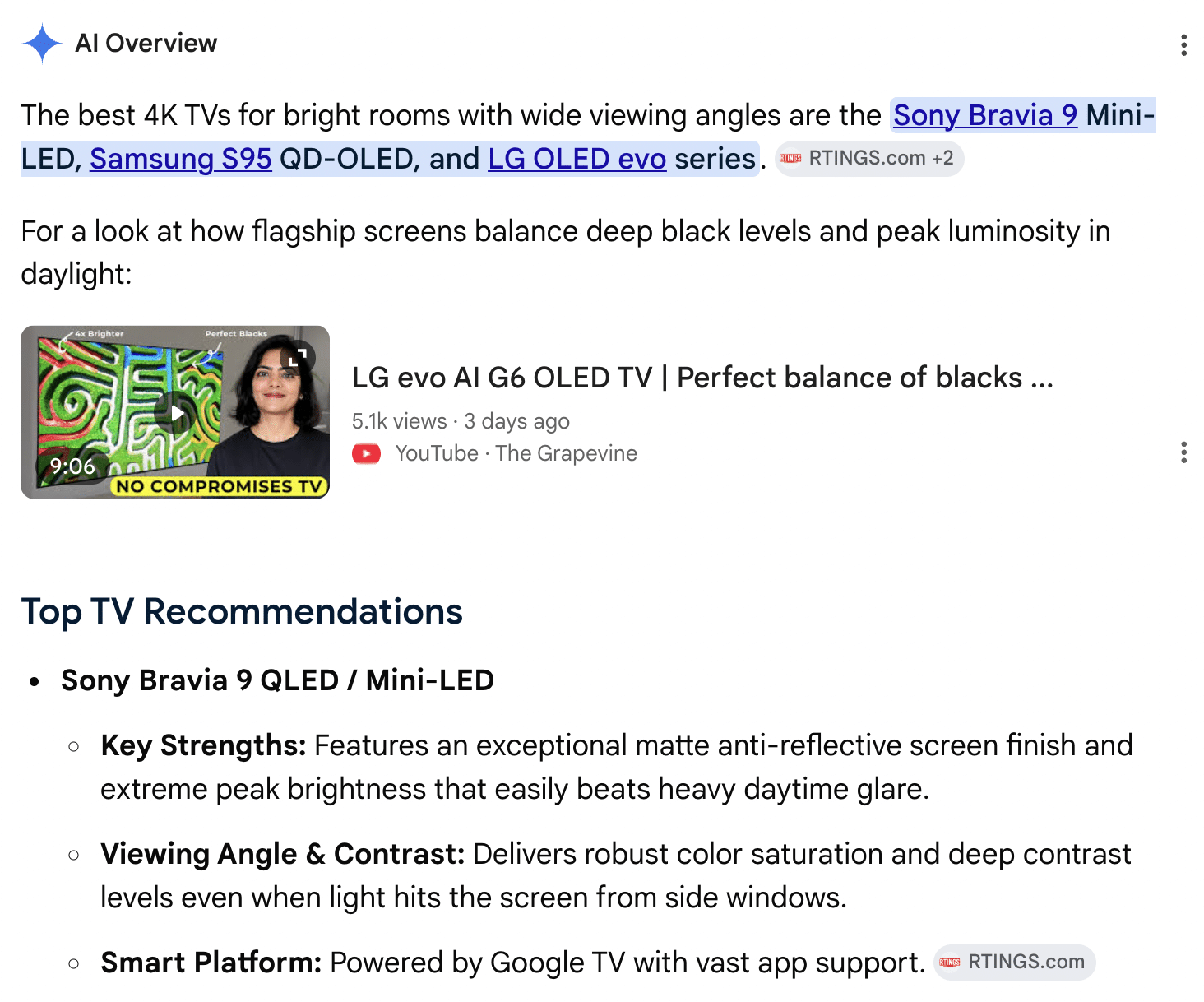
Their video and written content consists of visual proof of ownership, their own product testing methods, real-time updates and behind-the-scenes content.
These types of first-person content formats are gold for AI search ranking.
Strengthen Brand Authority
Brand authority is a key AI search ranking factor to prioritise when aiming to boost your visibility in a generative search.
In order to pull your AI authority up, you need to prove to crawlers that your brand has established credibility across a number of trusted sources.
This means investing in white-label SEO strategies to boost mentions and links to your brand across the web. Think digital PR campaigns, thought leadership, podcast appearances, interviews and guest posts on as many domains as possible.
Widening your footprint within your search niche helps signal to AI that your content is trustworthy, authoritative and recommended by other respectable sources.
Build High-Quality Backlinks
Editorial link insertions still remain one of the strongest AI search ranking factors, indicating that your domain is authoritative and worth mentioning in a generative overview.
The key here is to focus on earning links from relevant publications rather than chasing volume, especially if you’re looking to build AI visibility specifically. AI search engines are constantly looking for links from authoritative sources to your original research or a thought leadership post, rather than a service page link that offers no value to a synthesised result.
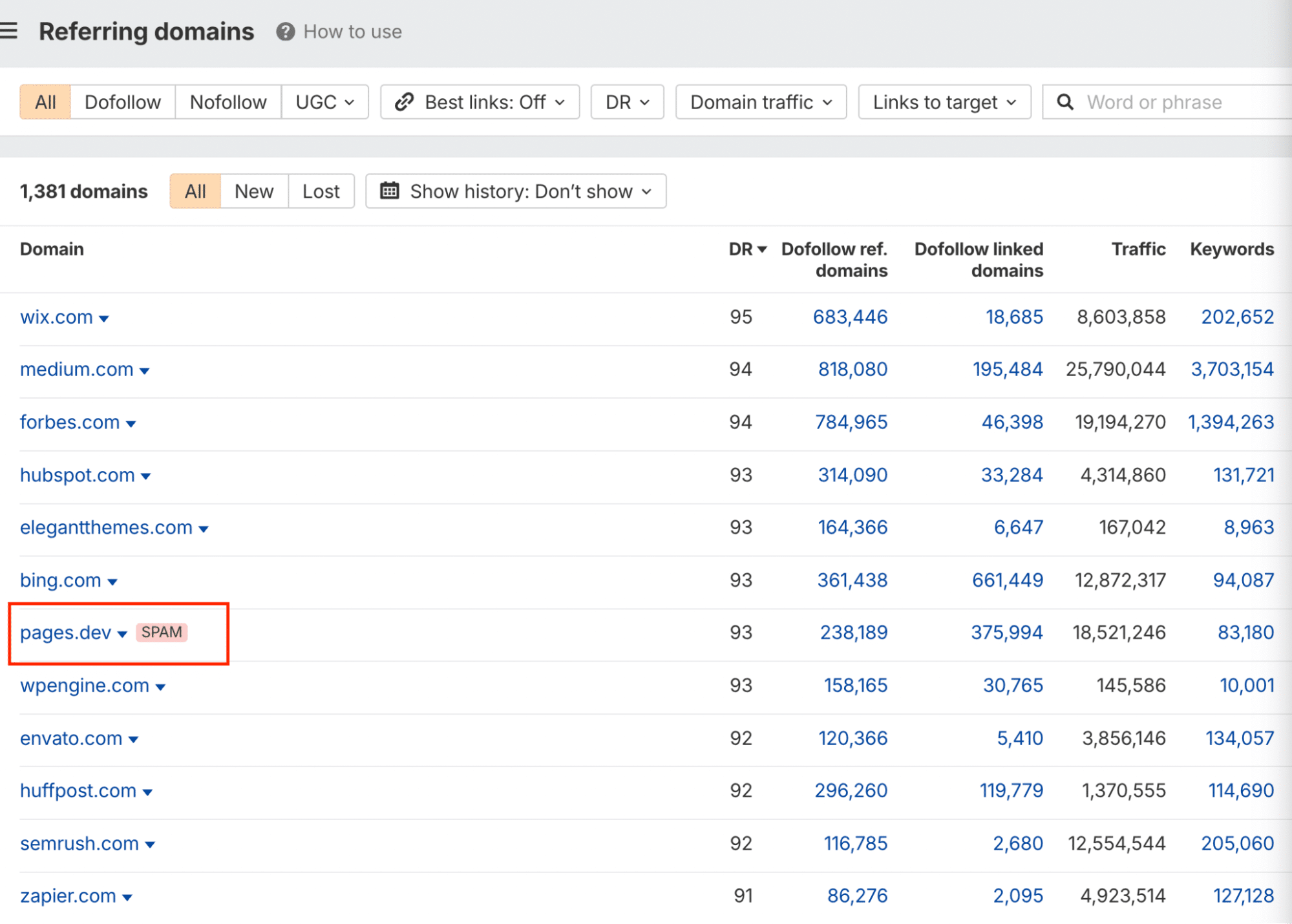
To check your current backlink profile health, use a backlink monitoring tool like Ahrefs to take a look at your current referring domains.
Is your site being linked out to by search niche competitors and authoritative sources? How does your backlink profile compare to your closest competitor?
The key here is to avoid low-quality, spam-like links. This can actually drag your authority down, rather than establishing you as a high-quality source for AI.
Look out for the Ahrefs ‘SPAM’ flag, and aim to remove these types of links from your profile.
Alternatively, check the spam score using Solvid’s spam score checker.
If your backlink profile lacks authority, investing in a link-building service like Solvid to secure authoritative placements on reputable industry websites helps strengthen your AI trust signals.
Publish Original Research
If you’re consistently publishing original content that cannot be replicated by a competing brand, you raise your chances of being cited for specific search intent.
For example, if you’re regularly publishing fresh data from your own surveys, research and experiments, you instantly create easy anchors that AI tools can cite.
Better still, content that features unique data is not only an AI search ranking factor on its own, but bloggers and journalists love to include statistics within their own content, raising your chances of gaining more authoritative backlinks as a result.
Keep Your Content Fresh
AI search tools like ChatGPT and Google AI Overview crawl online content for the most relevant stats, news and coverage on a topic.
The best way to secure yourself a permanent spot within a topical search is to keep updating your content, well after it ranks.
Fresh takes on topics, original data and newsworthy comments are among the top AI search ranking factors for a reason.
To stay relevant in the eyes of an AI search engine, ensure that you review your highest-performing pages at least every 6-12 months, and don’t forget to keep creating timely blog posts as well as your general evergreen content.
If you were taking a pillar/cluster content approach, make sure that your pillar content remains as your evergreen overview of a subject, and your clusters include newsworthy data and up-to-date takes on your topic of expertise.
Prioritise Well-Structured Content
While your content may be well optimised in terms of keywords and intent, a poorly structured piece of content can ruin your chances of appearing in an AI Overview.
The key here is to make it easy for AI crawlers to access what they need and provide searchers with a direct answer to their query.
To do this, ensure that your content has a logical page hierarchy, descriptive headings and search intent directly before expanding further down the article.
Other structured elements such as bullet points and FAQs also do the trick, making it easy for AI tools like ChatGPT to extract quickfire lines and direct quotes.
Don’t forget to reinforce this with schema markup. This is a machine-readable layer that directly speaks to search engines and AI systems and explains the context behind your content.
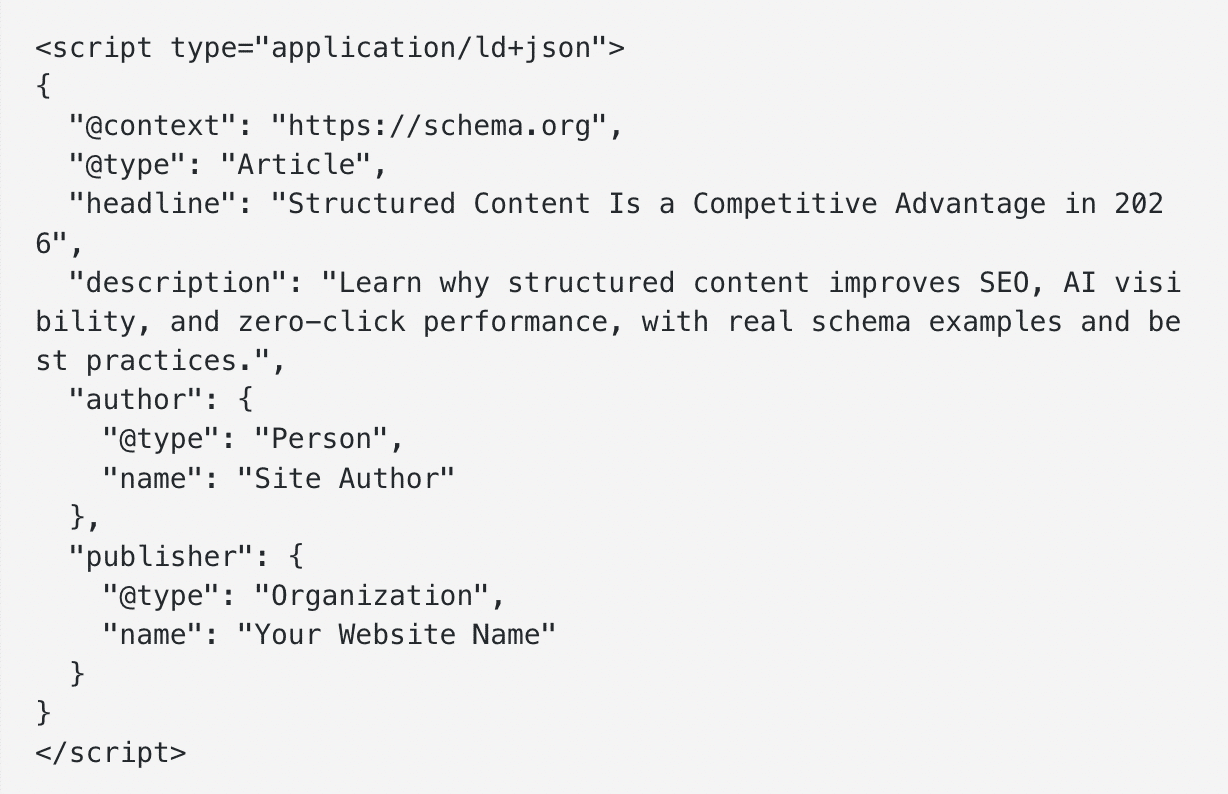
(Image Source: NewYorkSEO)
Schema not only increases eligibility for AI Overviews, but also rich results, featured snippets and even voice search answers.
Optimise for Semantic AI Search Ranking
The best way to target A search ranking factors is to stop repeating keywords within your content and instead cover related entities and concepts.
AI search engines favour content that uses natural language, as this is easier to extract and turn into a conversational answer for the user.
To optimise for semantic search, aim to include as much industry terminology as possible, and think about the broader context rather than exact match search phrases.
While it’s still important to include exact match keywords to rank well in SERPs, balance this with full conversational sentences, synonyms, and examples that reinforce semantic search.
Match Search Intent
Writing about a topic is one thing, but matching search intent is another. Search intent is the AI search ranking factor most commonly forgotten about, but is often the driving force behind successful AI visibility.
Your job as a content writer is to understand whether users want information, comparisons or products.
Think about the types of questions users are most likely to search for the answers to and use this to inform your content approach.
Better still, analyse AI search results to identify what type of content is being cited for the topics you’re trying to gain visibility for.
How have your competitors structured their content? What primary search questions are they answering? Following the same steps gives your content a chance to rival the competition and appear in a generative AI result.
Strengthen Your Internal Linking Strategy
Your internal linking strategy is just as important as your external linking strategy when it comes to learning how to optimise for AI search.
When you link topic clusters together using internal blog links, you create an easy path for AI crawlers to understand relationships between pages, and the full breadth of your knowledge on the subject at hand.
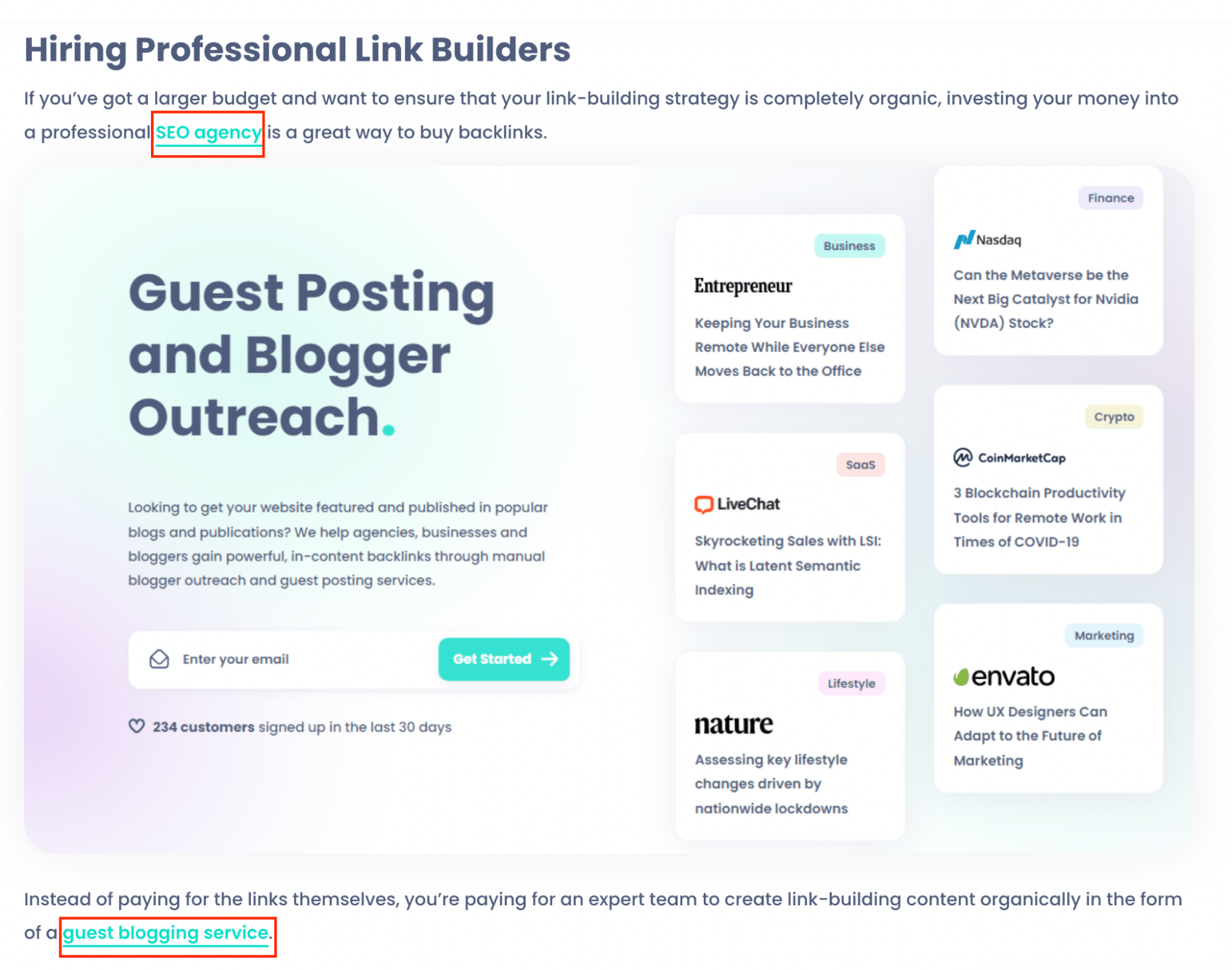
Better still, why not build your topic clusters around your core services? If you organically link to your service pages within a blog post, you increase your chances of being cited in an AI Overview as a service, as well as a source.
Don’t Forget About Technical SEO
Inaccessible content immediately diminishes any chances of appearing in an AI-generated search result.
While most AI search ranking factors focus on the actual content itself, it’s vital that you don’t forget about your technical SEO in the process.
All of your important pages should be crawlable and indexable, and your site architecture and XML sitemaps should be clean and well structured.
This is a great time to also think about your website’s core web vitals:
Page Speed: AI crawlers favour pages that load in three seconds or less. Fast-loading web pages help boost user experience and allow for speedy indexing.
Mobile Friendliness: More than half of online searchers browse content on a mobile device. If your website is not mobile-friendly, you risk turning away traffic once they click on your content, even if you’ve made it into an AI Overview.
Crawl Errors: Your content is not helpful if it can’t be crawled by an AI search engine. Make sure you’re regularly auditing your website to identify 404 errors, redirect issues and other technical problems that could prevent AI search engines from accessing your website.
Site Architecture: Is your navigation clear? Can both users and AI crawlers move through your sitemap with ease? Organise your content into logical categories that help AI discover new and updated pages easily.
Remember, technical SEO is the literal foundation of any high-ranking AI search strategy. If you’re unsure where to start, Solvid’s technical SEO services help resolve crawlability, indexing and site performance issues that can limit your AI discoverability.
Build a Multi-platform Presence
You need to be known as an expert across the web, not just within your own content. Broad topical authority across multiple platforms is a key AI search ranking factor to prioritise.
If you can find new and interesting ways to share topical expertise under your brand’s name, you double your chances of getting crawled and cited by AI.
Think podcast appearances, answering Connectively requests, featuring on YouTube channels and collaborating with other experts within your search niche.
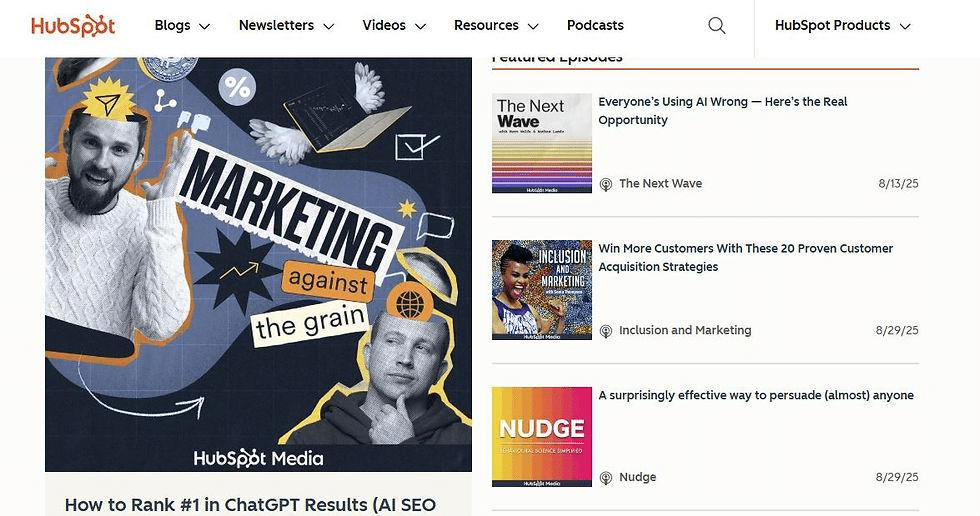
Take HubSpot, for example. Not only do their experts appear on relevant, industry-leading podcasts, but they also host their own show called ‘Marketing Against the Grain’.
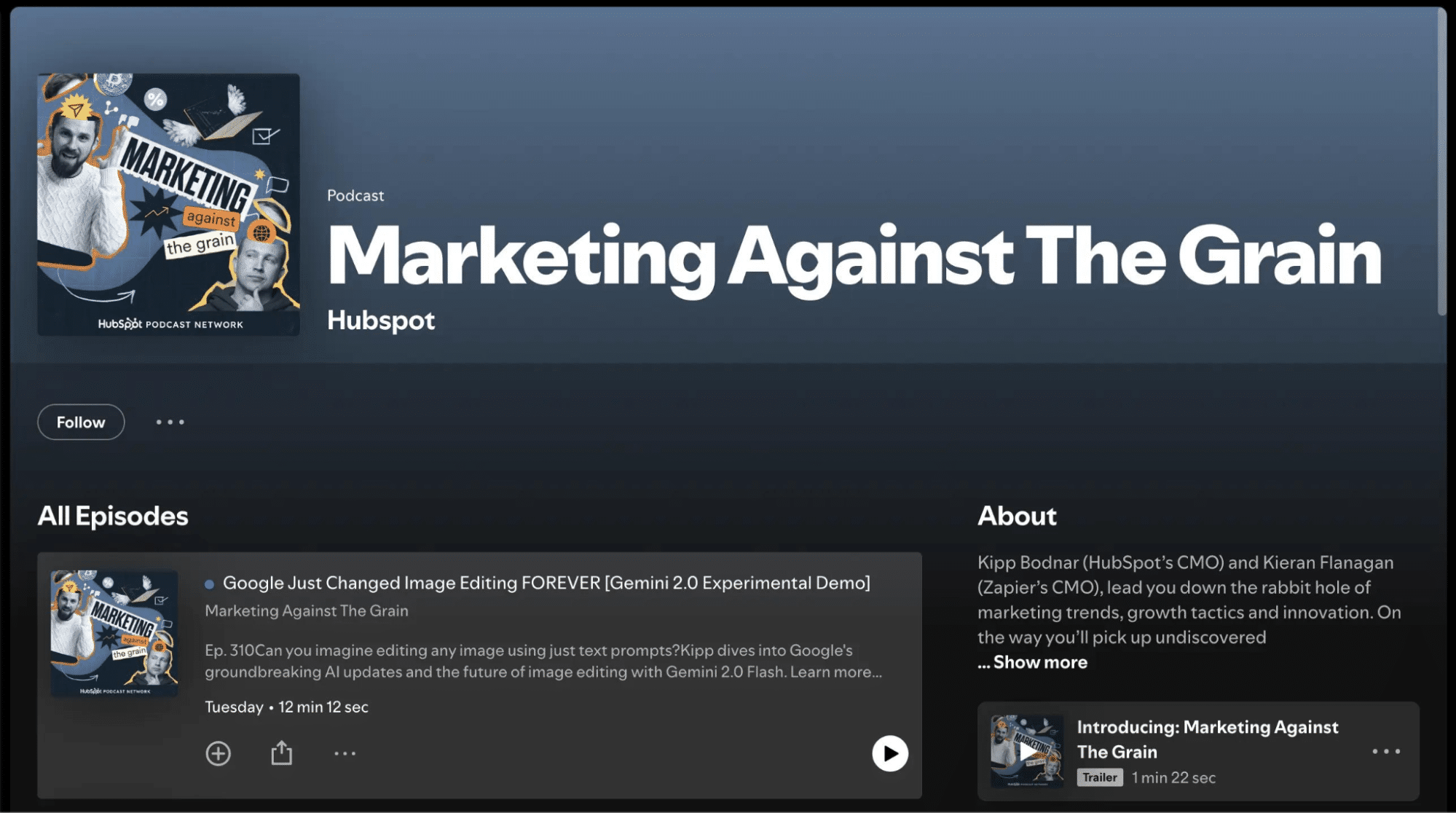
Appearing on platforms like Spotify, they gain a wider audience, diversify their content efforts and offer AI another chance to discover them in a targeted crawl.
Improve Your Citation Potential
Keep trying to improve your citation potential, even when you’ve finished your content.
During the editing stage, try to slot in concise answer paragraphs designed to be cited by AI. These should include stats, sources, and should aim to solve a direct problem, rather than rank for keywords.
To improve citation potential one step further, ensure that you’re using clear formatting, clear headings, bullet lists and tables that can be easily crawled and referenced.
For content that is already live, use an AI SEO checklist to audit and identify opportunities to improve citation potential across the board.
Establish Your Content Authors as Experts
Another way to get cited in an AI Overview is via your author, rather than your brand itself. If you showcase your authors as experts within their field, you help build credibility in front of an AI search engine.
Detailed author biographies, professional credentials, and references to professional industry experience are all brilliant AI search ranking factors that your team shouldn’t ignore.
Why not try linking author profiles to other published work both on your blog and across the web?
Better still, give your content authors their own platforms to increase their own visibility within your search industry.
From social profiles and LinkedIn activity to appearing as a source within interviews, use these opportunities to establish your author as a serious thought leader and a credible person to quote/cite in an AI-generated result.
How to Use Solvid to Improve Your AI Search Ranking
At Solvid, our dedicated team of AI SEO experts can help you craft a winning AI ranking strategy.
With over ten years of experience in technical SEO optimisation, content writing, digital PR and link building, we hit all the AI search ranking factors so you don’t have to.
From assessing how your website performs against the key AI search ranking factors to earning authoritative backlinks and digital PR mentions that boost AI visibility, we help you build an AI SEO campaign designed for the future of search.
As AI search ranking factors evolve, the most successful brands will adapt in line with search engine trends.
The key here is to regularly monitor target searches, take a record of the brands mentioned and their strategy and update your content accordingly for a chance of scoring a mention/citation in the next generative result.
FAQ
What are AI search ranking factors?
AI search ranking factors are the signals generative search engines rely on to select websites, sources and content that are summarised to generate an AI-powered answer to a search query.
Unlike traditional search engines that rank domains based on keyword-driven algorithms, backlink profiles and technical performance, AI-powered search engines have different priorities.
AI search engines focus on the content’s context, relevance and authority within its search industry, rather than its SERP ranking or keyword optimisation alone. Therefore, to rank on AI-powered search platforms like ChatGPT, Claude and Perplexity, your content needs to focus on answering search intent directly and provide accurate, citable information that the search engine can trust.
How does ChatGPT rank content?
AI search tools like ChatGPT rank content differently from Google’s SERP ranking algorithm. When choosing which content to feature, they favour content quality and depth, and ongoing trust signals over exact keyword matches.
AI engines like ChatGPT look for thorough, long-form pieces of content that dive into depth on their chosen topic.
ChatGPT is also constantly looking for mentions of your brand as a key credibility indicator. If a company’s name is featured with or without a link on numerous reputable websites, AI algorithms identify the brand as a reputable source to cite and mention in a generative answer.
Finally, properly structuring data such as location, FAQ, product prices, and availability makes it easy for AI engines to read your content more quickly, increasing the likelihood of a feature in a generative search result.
How is AI search different from Google search?
AI search differs from traditional Google search in several ways. Not only are AI search tools more advanced, but they provide searchers with a completely different experience.
Google search uses keywords within a search query to point the user to a number of exact-match websites. AI search, however, focuses on answering the query directly, while citing websites with the right context as a component of its answer.
Traditional Google searches also require the user to scroll through the SERPs and select the domain that best matches their query, while AI search is driving the ‘Zero Click’ search era, generating answers directly in front of the user.
Why is AI search important for SEO in 2026?
AI search visibility in 2026 is the new ranking first in SERPs. If your competitors are constantly being cited in AI Overviews and ChatGPT responses and you’re not, a high ranking position in a search result loses its power.
Online search behaviour continues to evolve, with AI search at the heart of it. AI search tools are now being used by business owners, decision-makers, and even researchers to evaluate information, optimise workflows and reinforce company strategies.
To attract traffic in 2026, being mentioned or cited in an AI overview or a ChatGPT result is everything.
If you’re constantly hitting all the AI search ranking factors, AI search tools like ChatGPT will reference your brand as an authoritative source, raising your chances of conversion as a result.
What makes content more likely to appear in AI search results?
Hitting all the right AI search ranking factors increases your chances of appearing in an AI search result.
Publishing original research, structuring your content for AI crawlers and strengthening your link-building strategy are just a few of the ways you can reinforce your content to improve citation potential.
AI search engines favour authoritative, credible sources. The more your brand is mentioned across the web and the more backlinks you receive from industry leaders, the more likely you’ll be to find yourself in an AI Overview.
Does technical SEO still matter for AI search?
Inaccessible content cannot be crawled by an AI-powered search engine.
All of your important pages should be crawlable and indexable, and your site architecture and XML sitemaps should be clean and well structured.
In order to improve your chances of ranking in an AI search, you must dedicate time to your core web vitals. Factors such as page speed, crawl errors and mobile friendliness all influence your AI visibility in 2026.
How can I improve my chances of being cited by AI?
There are plenty of ways to improve your chances of being cited in an AI search result.
For the best chance at success, slot in concise answer paragraphs designed to be cited by AI. These should include stats and sources, and should aim to solve a direct problem, rather than rank for keywords.
To improve citation potential one step further, ensure that you’re using clear formatting, clear headings, bullet lists and tables that can be easily crawled and referenced.
 194 customers signed up in the last 30 days




 hello@solvid.co.uk