
Improving visibility as a SaaS can be tricky, especially when you are competing in a competitive search environment.
SaaS link building requires a completely different approach to traditional link acquisition strategies, and pages that actually drive revenue do not naturally attract links, making it difficult to achieve product visibility in a busy searchscape.
With the average SEO team dedicating roughly 32-36% of their budget to link building in 2026, let’s take a closer look at the strategies you should prioritise as an SaaS link builder for the best results.
What is SaaS Link Building?
SaaS link building is the process of acquiring high-quality links from domains that point back to your SaaS products, services, and brand.
The goal of any successful SaaS link-building strategy is to secure link placements on authoritative, industry-relevant domains that automatically signal to the search engine that your target webpages are trustworthy and worthy of ranking.
To build a backlink profile that delivers results, SaaS teams must establish authority for the pages that drive the pipeline. Unlike other link-building campaigns, a SaaS link-building campaign is designed to build authority on product and comparison pages rather than just blog content.
SaaS brands use link building to target buyers who actually convert, rather than building domain authority alone.
Does Most SaaS Link Building Fail?
So why do most SaaS link-building efforts fail? It’s certainly not caused by a lack of effort; however, many SEO teams pour resources into the wrong forms of link building for SaaS success.
Building powerful links for an SaaS brand starts with prioritising the most authoritative pages for link acquisition.
Building links to blog posts while key product pages are ignored helps boost brand visibility as a resource, not a product/service consumers should invest in.
SaaS link building is less about gaining topical authority and more about building authority for the product itself within high-traffic listicles, how-to guides, and review forums.
Running blog-post-heavy outreach campaigns without a clear editorial angle won’t result in the metrics you’re looking for on revenue-generating pages. In fact, you’ll be building authority in the wrong part of your site.
How to Build Quality SaaS Links in 2026
The key to building powerful SaaS links in 2026 is creating a targeted strategy that funnels authority to the right pages.
We’ve put together a guide to building quality SaaS links from scratch that build authority, generate revenue for key SaaS products, and skyrocket your domain to the top of search.
Step One: Create a Targeted Set of Link Goals
Most SaaS link-building strategies fail due to a lack of strategic planning. In order to hit the ground running with your link-building campaign, your team must first establish its campaign goals, priorities, and metrics beyond domain authority.
1. Define Your Goals Around Your Desired Business Outcome
The number one mistake we see SaaS link builders make is treating their link acquisition as a numbers game.
While we often measure link-building success via the number of links acquired and a rising domain rating, this doesn’t actually guarantee success for your product pages.
Instead, centring your SEO goals around driving more qualified traffic to your money pages and improving rankings for high-intent, revenue-driving keywords is the key to increasing conversions for your target SaaS products.
The solution here is to align your link-building goals with the pages you want to drive more revenue from.
For example, if you’re a project management SaaS appealing to a startup audience, centring your link-building campaign around key product money pages, startup-focused keyword intent and topical review pages/listicles could help you generate a more targeted result.
2. Tighten Your Campaign Targets
SaaS link building is about quality, not quantity. When setting your link goals, it’s important to dive deeper into the specifics of your campaign, rather than shooting for any available placement.
At this stage, you want to consider factors such as audience relevance, referral traffic potential, and industry alignment as a checklist to consult before approaching any publications.
If you’re a cybersecurity SaaS, your product pages will perform better on technology blogs, security blogs and niche IT blogs, for example.
Focus on earning links that are relevant to your target audience. Setting targeted goals helps your link-building campaign stay on track and attract the best lead generation for your products.
3. Go Beyond Domain Authority or Domain Rating
Don’t rely too heavily on moving your domain authority score. While this can be a great indication that your SaaS link-building campaign is effective, there are many other metrics to consider when planning your campaign.
For SaaS companies specifically, we’d also consider planning your campaign around these key metrics too:
- Organic Traffic Growth: An influx of traffic to your target pages is a key sign that your link placement is effective for generating leads. For those of you selling software as a product, gaining more qualified leads as a result of your targeted link strategy will provide better returns than a powerful DA alone.
- Target Keyword Ranking: If you’re a project management SaaS, for example, ranking highly for key terms like ‘project management software’ or ‘AI project management’ could help your brand gain visibility amongst conversion-ready searchers. Planning your link anchors around high search intent keywords could help your team deliver more tangible results.
- Referral Traffic from Acquired Links: Why not set a goal surrounding referral traffic, too? Tracking referral traffic from acquired money page links helps your team identify which placements are delivering and what direction the campaign should go in.
The key here is to set targets across a number of metrics. The most successful SaaS link-building campaigns focus more on the overall ROI for the business, rather than SEO ranking alone.
Step Two: Build Link-Worthy Assets First
94% of online content receives zero external links. This number grows for commercial and product pages, especially if they fail to feature industry-first data or highly unique assets that drive attraction.
Before you move on to your outreach campaign, you must first create linkable entry points that help funnel authority to your target product/money pages.
This could be a well-cited comparison post, a report featuring original data, a free tool that advertises your SaaS or even an infographic that can be easily shared and linked out to.
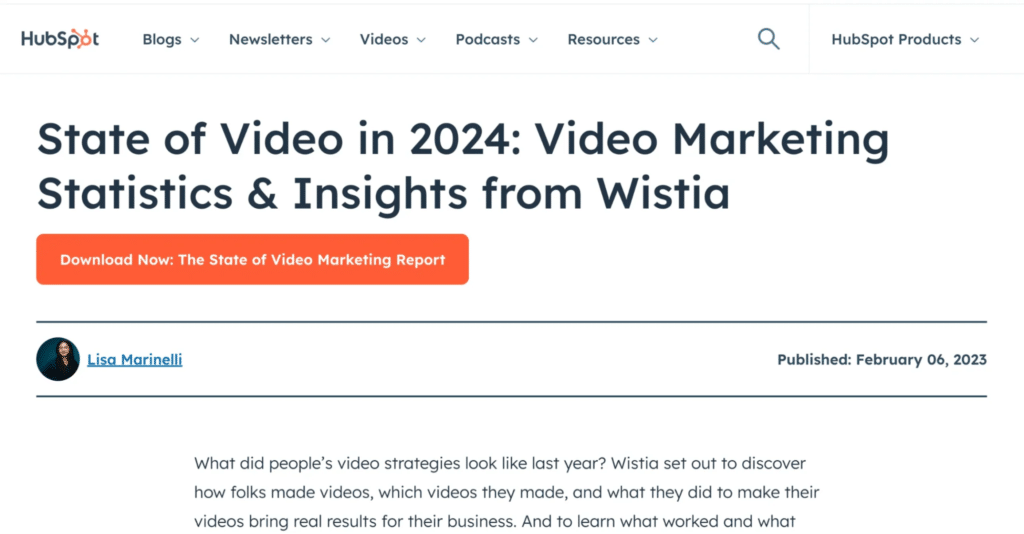
This is a link-building model we constantly see from SaaS giants like HubSpot, which constantly feeds authority to their product pages by creating powerful linkable assets that are organically used by other authoritative publications.
1. Create Free Tools That Advertise Your SaaS
For an SaaS, a well-built free tool could be your strongest linkable asset. However, the key here is to build something that actively solves a customer pain point, while teasing a full paid version on your site.
For marketers, the first free tool that often comes to mind is Moz’s free DA checker tool, which allows you to input a website URL and discover how it ranks on SERPs. This teaser tool solves the basic pain point, but for a more in-depth analysis, customers must purchase the full Moz suite.
Clockify’s time card calculator is another fabulous example of a tool-based linkable asset. In fact, their time card calculator tool is one of the website’s most-linked pages, regularly earning backlinks from topical HR blogs, productivity roundups, and time management guides.
Creating a free version of your SaaS tool helps give your SEO team linking leverage. Not only is it easier to approach publishers for a service page link when that link is helpful for their readers, but free tools are often naturally sourced and linked out to in content frequented by your target buyers.
Instantly, you’re flooded with constant inbound links from qualified leads looking to trial the full version of the tool.
2. Publish Industry-Relevant Data
Don’t forget to also cash in on any original data produced by your company. Unique studies, stats and reports are a link-building goldmine.
For the best results, try creating blog posts that centre around these unique stats and can be easily referenced in topical publications and on well-frequented domains visited by your target leads.

Take this stats post by UK cybersecurity SaaS Heimdal, for example. The cybersecurity software provider used data from their own reporting and other sources to create a highly linkable asset for their domain.
With plenty of stats to reference, writers, editors, and publishers from other high-authority domains can use this data in their own articles on cybersecurity trends and topics.
This creates an instant link bridge back to Heimdal, increasing on-page traffic and the chances of referral conversions, without directly advertising a product link.
Publishing topical studies and unique data also helps advertise your SaaS as a thought leader within its industry. If you’re regularly publishing new research surrounding your niche software market, you build trust and credibility as a brand, attracting both higher rankings and lead conversion as a result.
Step Three: Earn and Reclaim Your High-Value SaaS Links
Once you’ve created linkable assets, it’s time to stop relying on organic link building and start making some moves to earn specific links on target domains.
When it comes to SaaS link building, the most success comes from acquiring links to products and money pages, which can be difficult to achieve organically.
This means that it’s up to your SEO team to proactively reach out to publishers to pitch guest posts, link insertions, brand mention reclamations and foundational profile links.
However, with a cold outreach success rate of just 3.4% to 8.5%, securing a powerful product placement can be tricky.
Here are some of the best strategies to adopt when aiming to build high-quality SaaS links in 2026:
1. Pitch a Guest Post That Actually Gets Coverage
There is nothing more deflating than pitching an SaaS product link to an editor without a unique and newsworthy angle.
Nine times out of ten, a flat product link request will be rejected or come with a high publishing fee. For most startup SaaS SEO teams, buying backlinks is a last resort, not a first choice.
Instead, the key here is to focus on what the publication is actively looking for. View their recently published content. What topics are they covering? What perspective is missing from their coverage?
The top-tier approach in this case is submitting a guest post that organically includes your product link.
If you can submit the original research with a sharp angle, trend commentary or a helpful how-to post that naturally speaks to the publication’s audience, you’ll have a better shot at scoring a link for your SaaS product on your target domain.
Take this guest post example on UserSnap, for instance:
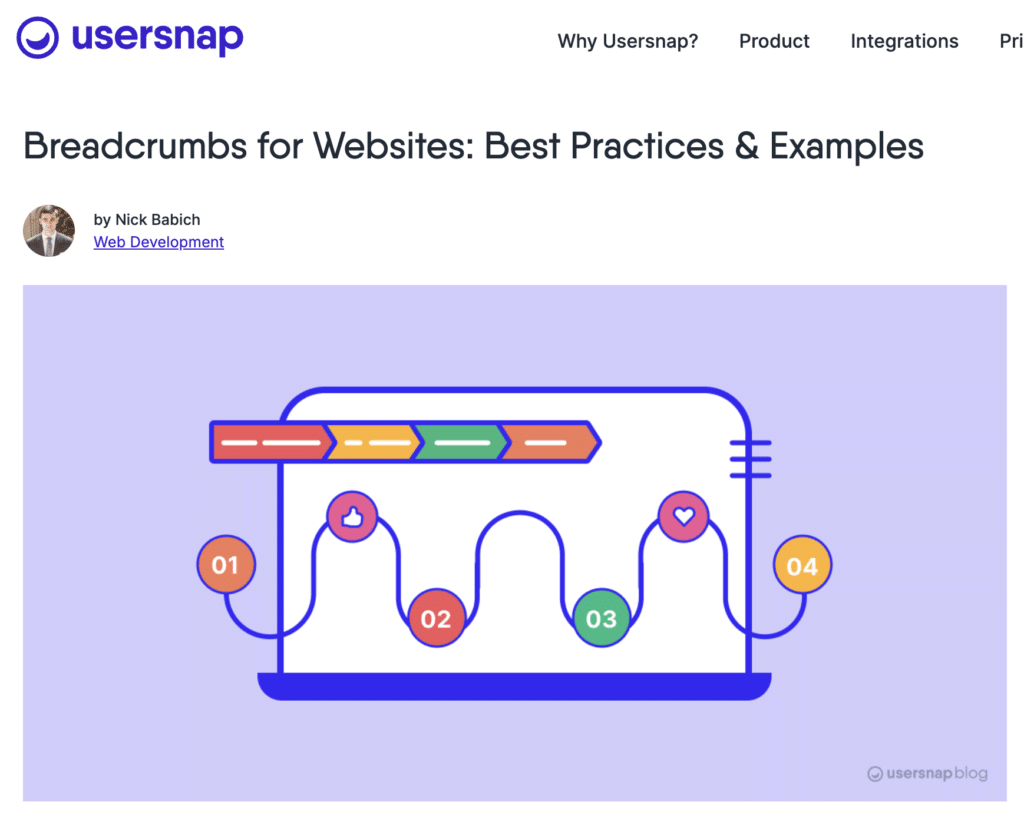
The guest post is a helpful guide to managing breadcrumbs for your website, which aligns with the publication’s coverage and is attractive to its target audience.
However, in the article, the SaaS website planning tool provider SlickPlan has taken this opportunity to organically insert a product link in the guest post to drive qualified leads to their services, tools, and products.
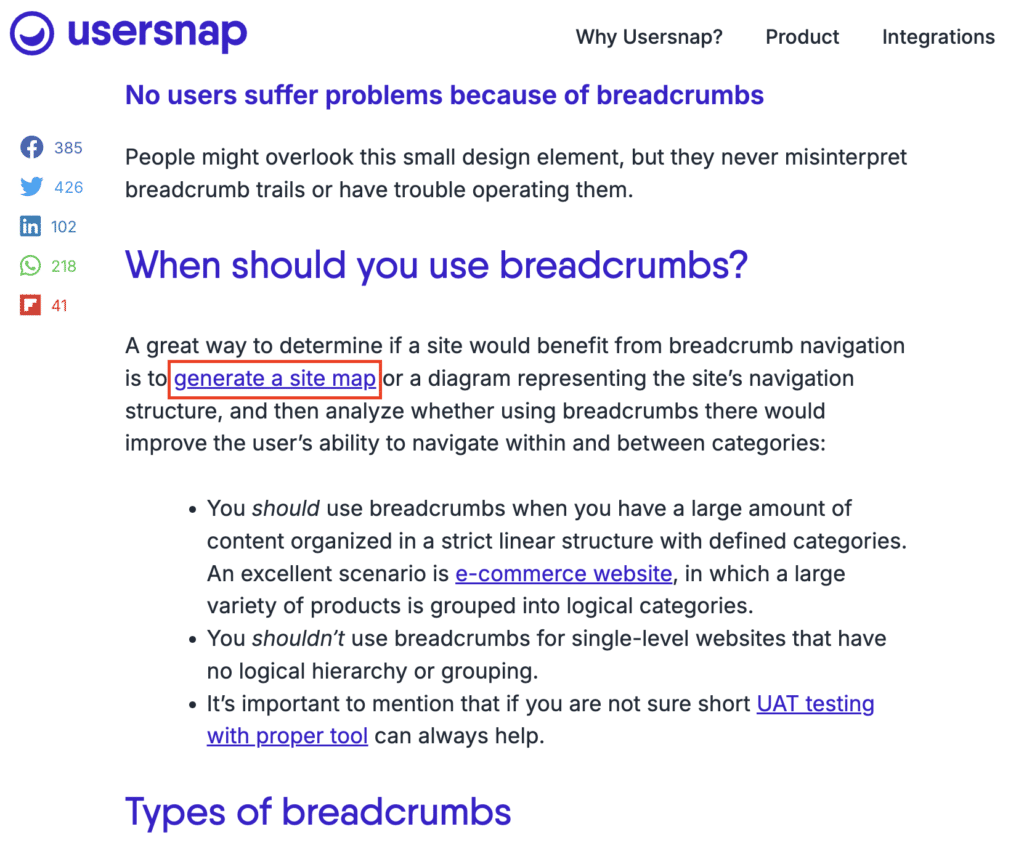
Guest posting is a great way to build links to powerful product pages while still pitching a topical guest post that benefits both the target publication and your link profile.
2. Prioritise Link Insertions in Listicles
Most journalists don’t cover SaaS tools unless they are writing a roundup. If you spot a listicle advertising the top twelve project management tools, for example, pitching your relevant product link here is acceptable and actually encouraged.
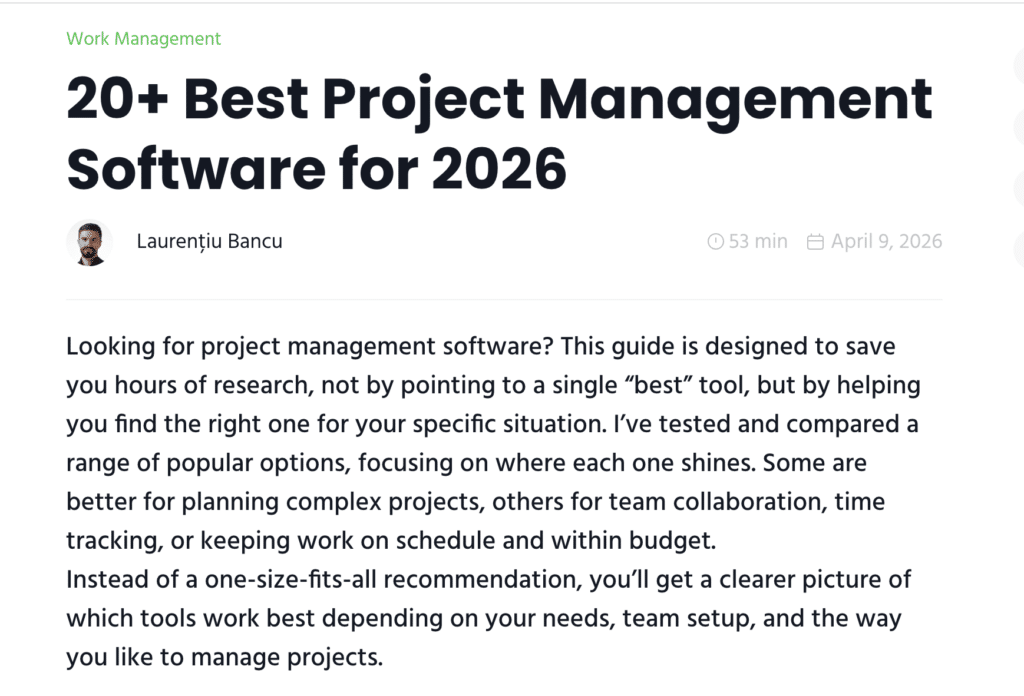
This is especially true if a listicle has been live for a long time. As trends change and software evolves, pitching your product as a solution to a new customer pain point or as a service with unique features could secure you a powerful link placement in a high-traffic piece of content.
3. Claim Unlinked Brand Mentions
If you’re constantly spotting your brand name or your products appearing in popular articles without the added link, you’re missing an opportunity for a massive SaaS link-building win.
Unliked brand mentions are like goldust for SEO experts. Reclaiming links for brand mentions is a fast way to build your SaaS link profile without having to do the content work.
Discovering your unlinked mentions is a task in itself, but it is well worth the effort for the results.
There are a few ways to hunt for unlinked brand mentions.
To discover historical mentions that you might have missed, tools like Ahrefs help you identify SaaS link-building opportunities.
Start by opening Ahrefs Content Explorer and searching “Your Brand” -site:yourdomain.com (you want to exclude mentions of your brand on your own domain).
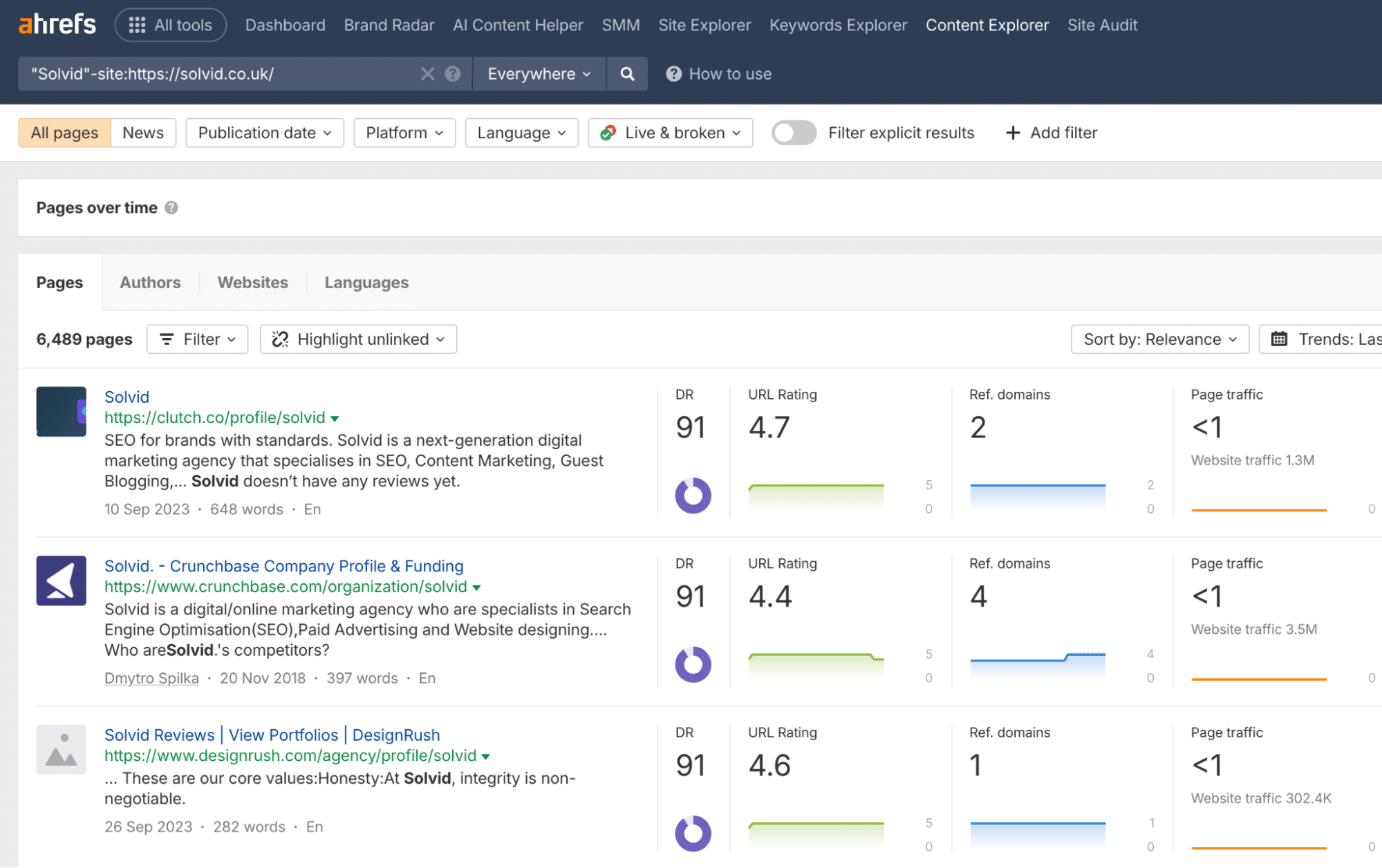
Set the search dropdown to “In content” to filter out irrelevant sidebar results.
Next, use the “Highlight unlinked” feature and input your domain to instantly reveal which pages mention you without linking back.
These results can be filtered by domain rating, traffic and more to help you narrow down your outreach opportunities.
Once you’ve found unlinked mentions from target domains, it’s time to take an outreach approach that actually works.
Instead of flat-out requesting the link insertion from a publisher, instead frame your request as a helpful correction, rather than a favour.
This could be phrased as a helpful update or a way to help give more context to the brand mention for the publication’s readers.
Success rates tend to be higher for these types of requests, especially because the editor has already organically mentioned your SaaS or product within the live content.
Lastly, don’t forget to set up alerts for future brand mentions. For this, you can set up a Google alert for your brand name, a phrase associated with your SaaS and any unique product names or features.
4. Don’t Forget to Claim Foundational Profile Links
Don’t forget to also build as many foundational profiles as possible to help create a natural, diverse backlink profile for your SaaS.
While these can’t replace editorial authority, foundational profile links help build SaaS credibility for both your target audience and the search engine.
Make sure your SaaS is claimed and linked to high-traffic review sites and platforms in your industry, such as Crunchbase, Product Hunt, G2 and Capterra.
This goes for integration marketplace listings, too. If your SaaS product naturally integrates with popular tools like HubSpot or Zapier, you should aim to get your integration listed and linked out to in their marketplace.
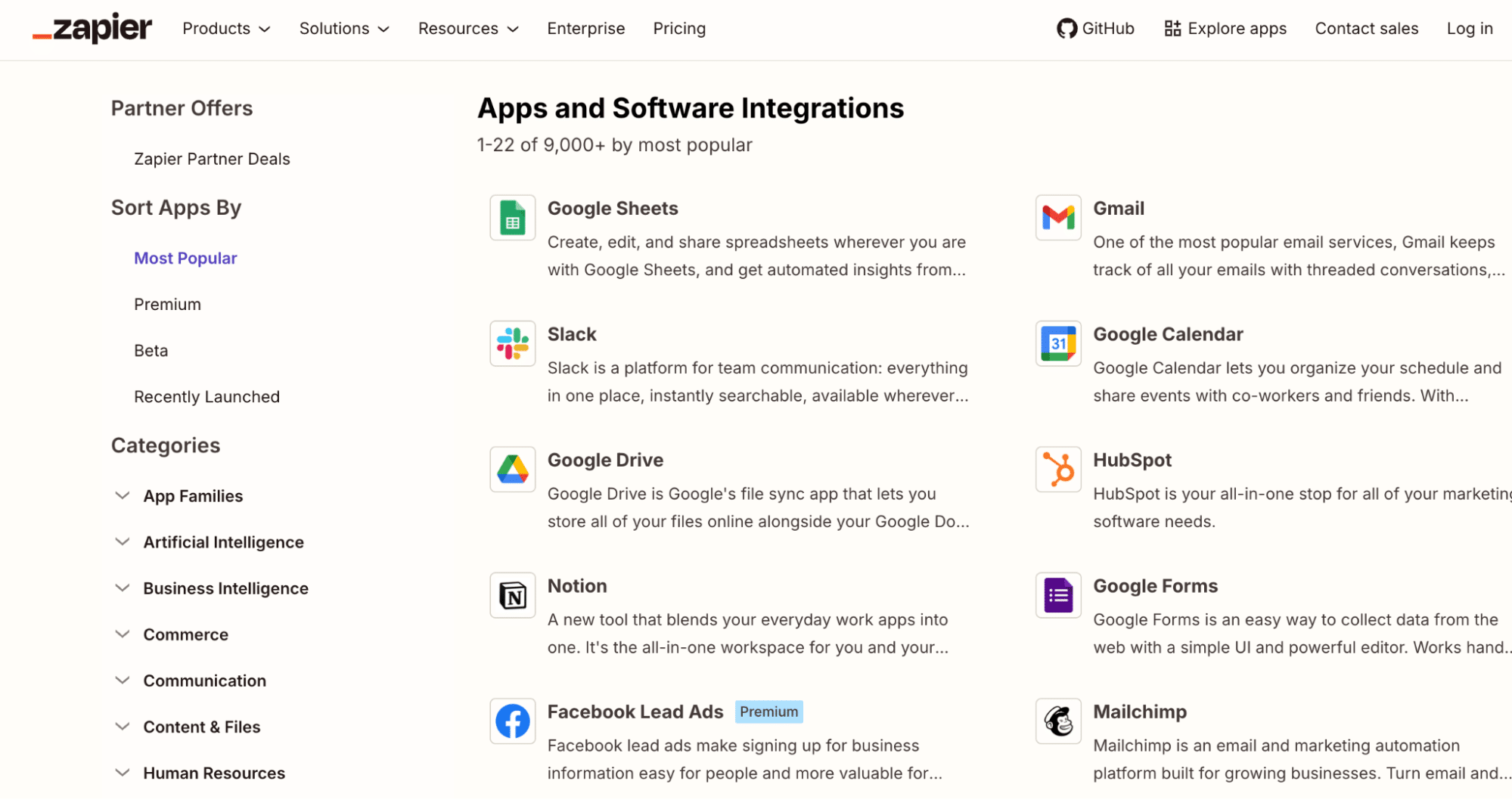
For example, Zapier’s integration directory alone carries substantial domain authority, which could have a positive effect on your own SaaS link-building campaign.
Tracking Your SaaS Link Building Campaign & Calculating Your ROI
Now that your SaaS link-building campaign is in full swing, it’s time to start tracking your results.
Many teams fail to track their link-building efforts accurately. If you’re only keeping score of your DA/DR marker, progress can look slow and not worth the effort. This is why many startup SEO teams cut link building first.
However, keeping track of your keyword ranking, organic traffic growth, and search visibility alongside your link-building efforts could paint a very different picture for your SaaS.
1. Measure Organic Traffic Growth to Linked Pages
Try to avoid tracking your SaaS link-building success via domain visibility alone. As an SaaS brand, the most important results come from your target product pages and money pages instead.
Start by measuring your organic growth to your linked target pages. If you can see sustained growth in organic sessions to the pages targeted in your campaign, this is a clear sign that your SaaS link-building efforts are paying off.
To discover this, you can use any of the best backlink monitoring tools on the market. For this, we’re going to use Ahrefs:
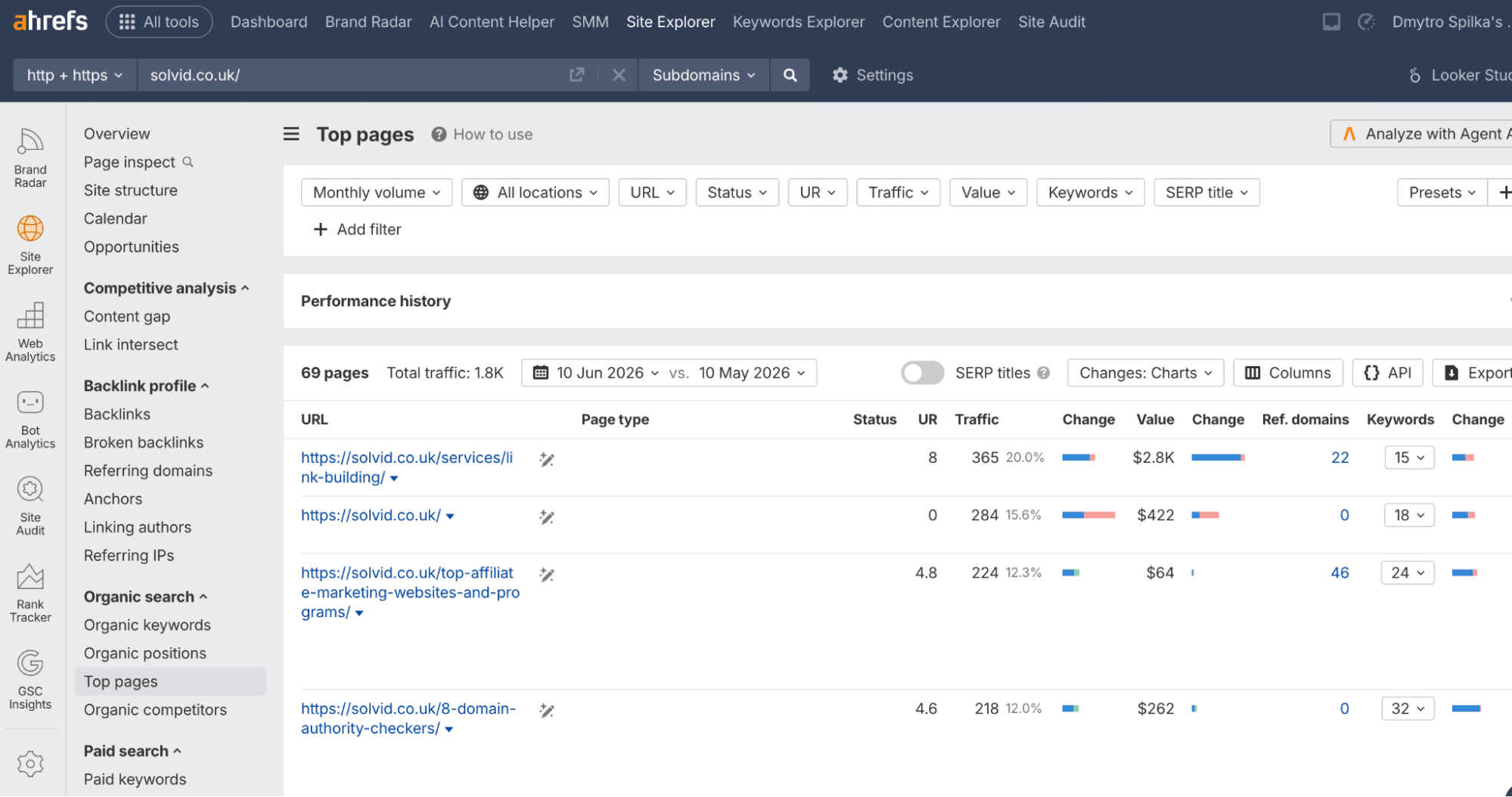
Start by navigating to Site Explorer and entering your domain name (your base URL).
Head to Top Pages in the drop-down bar and locate the URL of the target product pages you’ve been building links to.
Now you can review your estimated organic traffic trends before and after securing SaaS links across the web.
2. Connect Your SaaS Link Building Efforts to Business Revenue
Now that you’ve got an idea of your organic traffic, let’s measure how this has contributed to your key SaaS revenue streams such as demo requests, product conversions and free trial signups.
To do this in Ahrefs, we’re navigating to Site Explorer once again. Here, you’ll head to the Backlinks section and first identify which pages have gained new referring domains.
For these pages, export the backlink growth data for a more in-depth look at when they were secured and how many links your target pages have acquired.
Use this data to compare backlink acquisition dates with:
- Organic traffic growth
- Demo requests
- Free trial signups
- Pipeline influenced by organic search
Here you can see if the pages that gained links directly improved revenue and generated measurable pipeline growth.
3. Try to Focus on URL-Level ROI
In 2026, the most successful SaaS link-building teams aim to measure growth at the page level rather than relying solely on DR score movement.
The key here is to tie backlink results to your initial goals and KPIs. Has your campaign improved rankings, traffic conversions, etc?
If you focus on pipeline influence rather than SEO visibility, you’ll understand what needs to happen next.
This could be a greater focus on certain product pages, targeting different keywords or creating new linkable assets. Creating a clear connection between SEO investment and business growth helps define a future link-building strategy that will be even more successful.
Could a White-Label Link Building Agency Help You Achieve Your Goal Quicker?
If you’re a SaaS link-building beginner, outsourcing to an expert could be the key to driving SEO success in half the time.
Link-building campaigns take time and extensive resources to achieve real gains in your online visibility. This is why most SaaS teams outsource their link building to white-label agencies that can deliver real results.
A white-label link-building agency focuses on using white-hat techniques to build authoritative, organic links. This means avoiding spammy link placements, low-quality websites, PNBs and link farms that result in costly penalties for your domain.
Instead, white label link builders mainly rely on the strategies mentioned above, but at an expert level.
Here are a few reasons they can accelerate your SaaS link-building efforts:
- Access to an Established Publisher Portfolio: White-label link builders are constantly building links through guest posts, insertions, and digital PR. This means that their initial publisher contacts list will be ten times as long as yours. With existing networks to call upon in most niche industries, many professional link builders can skip the cold outreach stage and immediately secure a powerful placement for your page.
- Fast Campaign Execution: If your SEO team are balancing internal and external content creation, social media, product marketing and more, adding link building to the list can tip small teams over the edge. White-label link builders have the time and resources to focus on prospecting, outreach, placement tracking and management, often resulting in quicker execution of the entire SaaS link-building campaign.
- Link-Building Expertise: This goes without saying. A white-label link-building agency knows how to target competitive keywords, select authoritative publications and create content that will naturally attract backlinks.
White-label agencies that specialise in link building know how to utilise your link-building budget effectively. With the ability to compress months of prospecting and outreach into a shorter timeframe, your SaaS could enjoy powerful results without the hard work.
Building SaaS Links With Solvid
SaaS link building can transform product page revenue and skyrocket your online visibility. However, to see results, campaign dedication is crucial.
For busy SEO teams looking for long-term results, why not check out Solvid’s link-building packages, designed to deliver a powerful SaaS backlink profile.
At Solvid, we use over 15 strategies to build high-quality SaaS backlinks from industry-relevant websites, including guest posting, link insertions, thought leadership, branded link building, digital PR, AI link building, and broken link building.
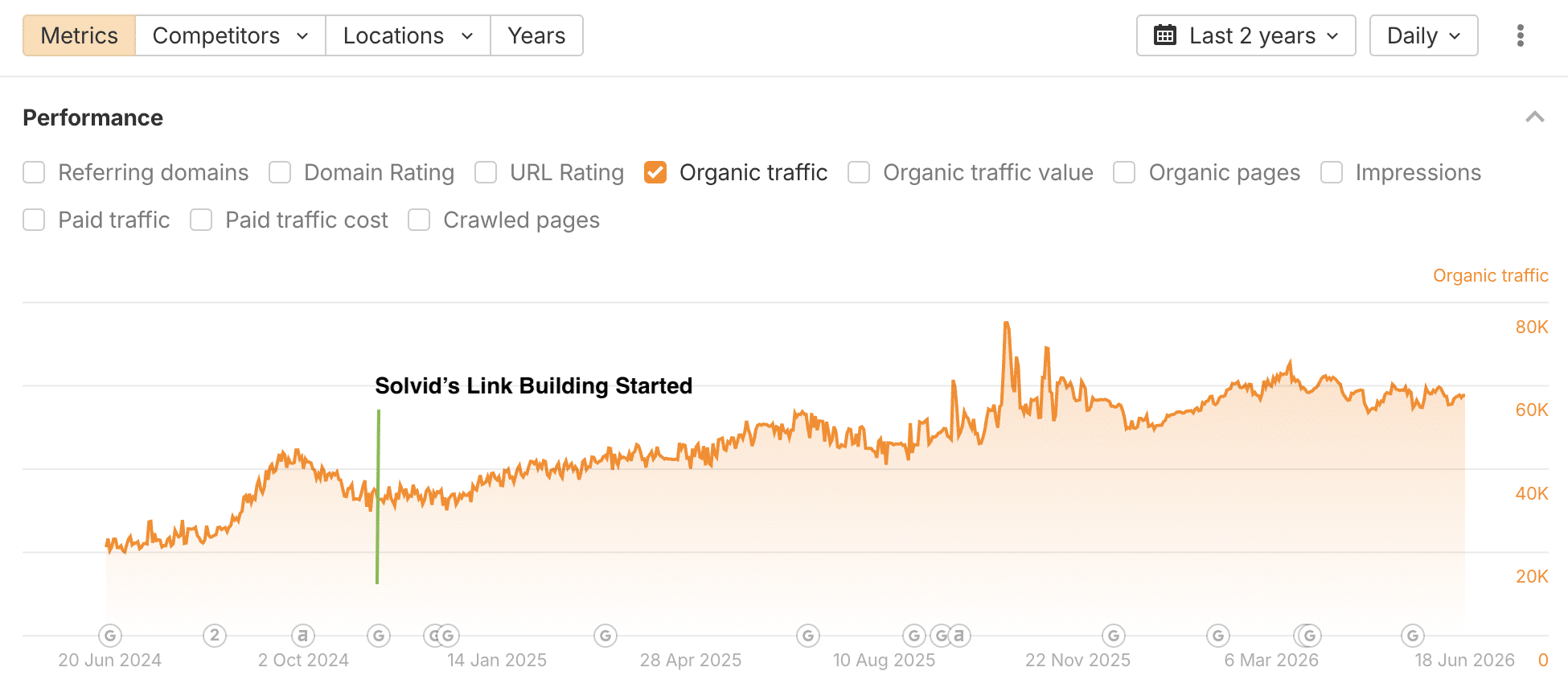
Our goal is not only to boost your SEO visibility but to get your pipeline moving as a result. Below is one of our case studies on a popular UK-based HR software.
Whether you’re an SaaS link-building beginner or a seasoned SEO team, we can help scale your link building efforts efficiently and turn organic visibility into a predictable source of pipeline growth.
Get in touch with our team today to discover how a strategic SaaS link-building campaign can support your growth goals.
FAQ
What is SaaS Link Building?
SaaS link building is the process of acquiring high-quality links from domains that point back to your SaaS products, services, and brand.
The goal of any successful SaaS link-building strategy is to secure link placements on authoritative, industry-relevant domains that automatically signal to the search engine that your target webpages are trustworthy and worthy of ranking.
Why Is Link Building Important for SaaS Companies?
SaaS brands use link building to target buyers who actually convert, rather than building domain authority alone.
Building links to key product pages and money pages helps increase organic traffic and generate revenue for your SaaS products and services.
Building links can also improve your SaaS brand’s search authority in your industry niche. This means that when target leads input popular search terms, your products appear higher than your competitors, increasing your chances of conversion.
What Types of Pages Should SaaS Companies Build Links To?
Unlike other link-building campaigns, a SaaS link-building campaign is designed to build authority on product and comparison pages rather than just blog content.
Building powerful links for an SaaS brand starts with prioritising the most authoritative pages for link acquisition.
Building links to blog posts while key product pages are ignored helps boost brand visibility as a resource rather than as a product/service consumers should invest in.
SaaS link building is less about gaining topical authority and more about building authority for the product itself within high-traffic listicles, how-to guides, and review forums.
How Can You Measure SaaS Link Building ROI?
Many teams fail to track their link-building efforts accurately. If you’re only keeping score of your DA/DR marker, progress can look slow and not worth the effort.
As an SaaS brand, the most important results come from your target product pages and money pages instead.
Start by measuring your organic growth to your linked target pages. If you can see sustained growth in organic sessions to the pages targeted in your campaign, this is a clear sign that your SaaS link-building efforts are paying off.
You should also measure how this has contributed to your key SaaS revenue streams, such as demo requests, product conversions and free trial signups.
The key here is to tie backlink results to your initial goals and KPIs.
Should You Outsource SaaS Link Building to an Agency?
If you’re a SaaS link-building beginner, investing in some expert help could be the key to driving SEO success in half the time.
Link-building campaigns take time and extensive resources to achieve real gains in your online visibility. This is why most SaaS teams outsource their link building to white-label agencies that can deliver real results.
A white-label link-building agency has fast access to a network of authoritative, relevant publishers and can dedicate the time and resources needed to get your link-building campaign moving.
 194 customers signed up in the last 30 days




 hello@solvid.co.uk